
Reviewed · NORTH SHORE TOURS
Group Surf Lessons for beginners on the North Shore of Oahu
The best part of this North Shore lesson is its careful start. You do not simply grab a board and get pushed into the surf. Your instructor begins on the beach with a warm-up, safety guidance, and repeated practice of the pop-up, then takes you into the water when you are ready. That approach matters when your legs are wobbly and the ocean feels bigger than it looked from shore.
I like the patient instruction and the fact that the board, leash, and rash guard are included. I also like the private setup: only your own group takes part, so your instructor can watch your foot placement and help you adjust. The main consideration is physical effort. You need a moderate fitness level, and this is a water activity, so anyone who struggles with swimming should request a life jacket ahead of time.
In This Review
- Key points for your North Shore surf lesson
- Meeting at Kahalewai Place in Haleiwa
- The first 20 minutes: gear, safety, and surf manners
- Beach practice makes the first wave less confusing
- Entering the water and choosing small waves
- Catching your first wave with Connor’s help
- Building balance, turns, and wave timing
- What the $150 price includes
- Who will get the most from this lesson
- North Shore details that make the lesson memorable
- Booking timing and cancellation rules
- Should you book this Oahu surf lesson?
- FAQ
- Where does the surf lesson begin?
- How long does the lesson last?
- What equipment is included?
- What should I bring?
- Can I request a life jacket?
- What happens if bad weather cancels the lesson?
Key points for your North Shore surf lesson
- Dry-land pop-up practice comes first: You work on foot placement, balance, and body position before entering the water.
- Connor gives hands-on coaching: His teaching focuses on patience, careful observation, and helping first-timers catch their first waves.
- Your group stays private: The lesson is designed for your booking group rather than a large public class.
- Gear is supplied: A surfboard, surf leash, and rash guard are included, so you only need a swimsuit and reef-safe sunscreen.
- You can choose morning or afternoon: That makes it easier to fit the lesson around the rest of your Oahu plans.
- Turtles may appear nearby: One group spotted turtles swimming by their boards, though wildlife sightings are never promised.
Meeting at Kahalewai Place in Haleiwa
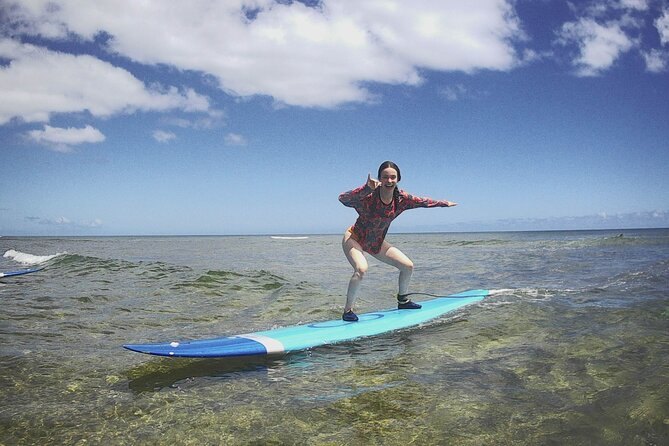
Your lesson begins at Kahalewai Place, Haleiwa, on Oahu’s North Shore. The activity ends back at the same meeting point, which keeps the plan simple if you are arranging your own transport or combining the lesson with time in Haleiwa.
The location is near public transportation, but no hotel pickup is included in the information provided. Plan your route before the lesson and leave enough time to arrive at Kahalewai Place ready to change or organize your belongings. A mobile ticket is provided, and confirmation arrives at booking.
You have a choice of morning or afternoon start times. I would choose based on your wider day rather than assuming one period is always better. A morning lesson leaves room for lunch and other North Shore plans. An afternoon lesson can work well if you prefer a slower start, but remember that the lesson lasts about two hours and still requires energy.
The exact beach park can vary, and each park has different accessibility options. If mobility or beach access is a concern, call ahead and ask which location will be used for your booking. That small bit of planning can make a real difference with sand, uneven ground, and getting into the water.
More of the North Shore to see:
- Oahu Grand Circle Island and Haleiwa Tour: 9-Hr Deluxe Experience
★ 5.0 · 17,387 reviews - Oahu Circle Island Tour with Waimea Waterfall
★ 5.0 · 3,912 reviews - Tour of North Shore & Waimea Waterfall
★ 5.0 · 3,682 reviews
The first 20 minutes: gear, safety, and surf manners
At arrival, the instructor greets your group, supplies the equipment, and explains how the lesson will work. You receive a surfboard, surf leash, and rash guard. The rash guard helps shield your arms and shoulders, but you still need to wear your own swimsuit and apply reef-safe sunscreen.
The safety briefing is not filler. You learn about current ocean conditions, beginner-friendly waves, and basic surf etiquette. For a first lesson, knowing when to paddle, where to position yourself, and how to avoid interfering with another surfer is just as useful as learning to stand.
The instructor also helps you understand what sort of wave to choose. Beginners do not need the biggest wave available. The goal is to find a manageable wave that gives you enough push to stand and enough time to keep your balance.
This is one reason the private format is useful. Your instructor can keep an eye on your group rather than splitting attention among a large crowd. The lesson remains a group activity, but the group is your own party, whether that means one person, a couple, or a small set of friends and family.
Beach practice makes the first wave less confusing
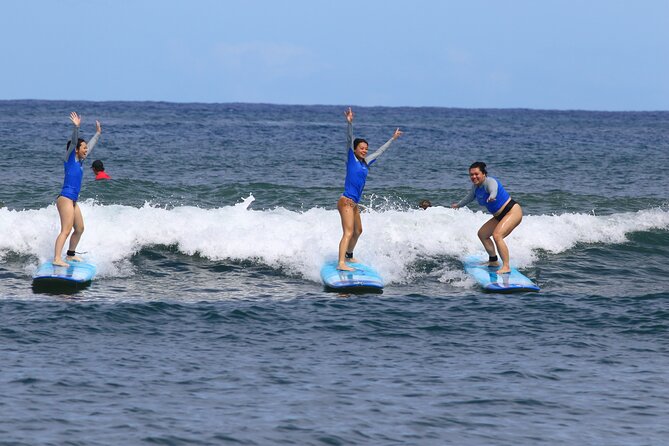
Before you head into the water, you do a short warm-up and rehearse the pop-up on land. You practice moving from lying on the board to standing, with attention to foot placement and balance.
That dry practice is one of the strongest parts of the lesson. The pop-up happens quickly in the ocean, and it is easy to freeze when a wave approaches. Repeating the motion on the beach gives you a sequence to remember: place your hands, bring your feet underneath you, stand with balance, and keep your body in position.
You will not become a polished surfer in two hours, and the lesson does not pretend otherwise. But you can make the first water session less chaotic by learning the basic movement before the board starts moving.
The physical side should be clear. You will paddle, push up, stand, lose balance, and try again. A moderate level of fitness is recommended. If swimming is difficult for you, request a life jacket in advance rather than waiting until the lesson begins.
Entering the water and choosing small waves
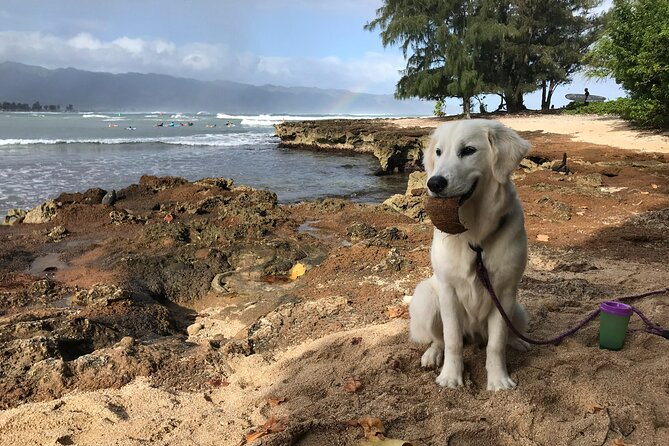
Once the instructor feels your group is ready, you head into the ocean to work on paddling and catching small waves. The focus stays on basic control rather than impressive tricks.
Your instructor helps you understand when to paddle and how to match the wave. Timing can be the hardest part for a beginner. Paddle too early and you may lose momentum. Paddle too late and the wave may pass beneath you. Having someone watch and guide you makes those first attempts more productive.
The first successful ride can be short. That is fine. A few seconds of standing on a moving board gives you useful information about your balance and stance. You begin to feel how the board responds and what happens when you lean too far forward or back.
The water portion is also where the lesson’s safety briefing becomes practical. You are learning to share the surf area, manage your board with a leash, and pay attention to the conditions around you. These are habits worth learning from the start.
More surf lessons on Oahu:
- Open Group Surfing Lesson in Waikiki, Hawaii
★ 4.5 · 582 reviews - Oahu: Beginner-Friendly Waikiki Beach Surfing Lesson
★ 4.9 · 425 reviews - Surfing Lessons On Waikiki Beach
★ 4.5 · 317 reviews - Waikiki Private Group Surf Lesson
★ 5.0 · 298 reviews
Catching your first wave with Connor’s help
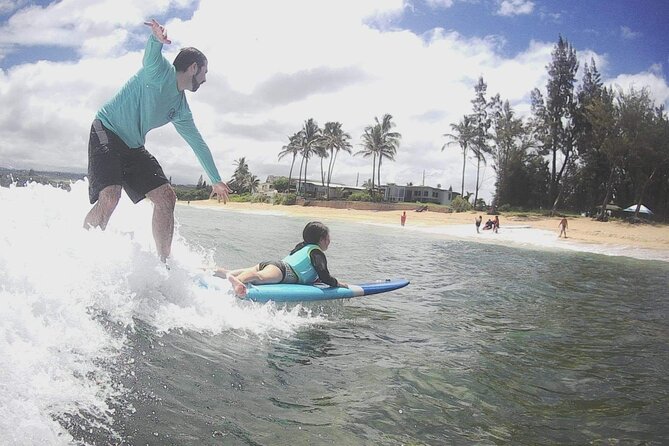
Connor is the instructor most clearly identified in the feedback provided. His teaching is described as careful, observant, helpful, and patient. One first-time surfer managed to catch first waves during the lesson, while another group appreciated his effort to help them reach their own goals.
That combination of patience and close attention is especially important for beginners. A strong instructor does not simply tell you to stand. He watches what went wrong, then gives you one adjustment to try on the next wave. It might be foot placement, balance, paddling strength, or the moment you rise.
You should expect encouragement, but also correction. That is a good thing. Surfing is a physical skill, and vague advice does not help much when the board is moving beneath you. Clear, simple instructions give you something you can act on immediately.
The amount of water time can also depend on how quickly your group picks up the basics. The instruction is built around continued practice, and the provided feedback describes Connor as generous with time. Still, you should think of this as a lesson, not an unlimited surf session. The pace must account for safety, rest, and the needs of everyone in your private group.
Building balance, turns, and wave timing
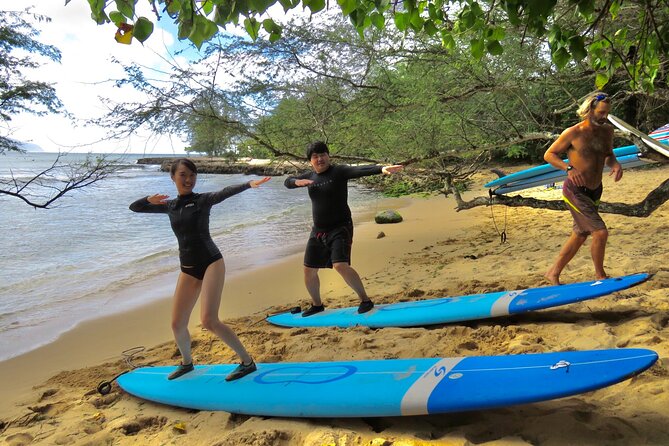
After you catch a few waves, the lesson can move beyond the first stand. You work on riding longer, improving balance, and gaining more control. Turning and wave timing become the next small steps.
Do not expect advanced surfing after one visit. The real value is that you leave with a better sense of what to practice. You learn how your feet should sit on the board, how your balance changes while riding, and why a wave works better when you meet it at the right moment.
If you are already comfortable on a board, the instructor can help refine your technique instead of repeating every beginner explanation. The activity is described as suitable for learning to surf or refining technique, although the exact level of coaching will depend on your existing ability and the conditions that day.
Your group’s size and experience level matter here. A couple with similar ability can move at a steady pace. A mixed group may need more flexibility. Since only your group participates, you can ask the instructor to adjust the lesson to your needs rather than being locked into the pace of unrelated participants.
What the $150 price includes
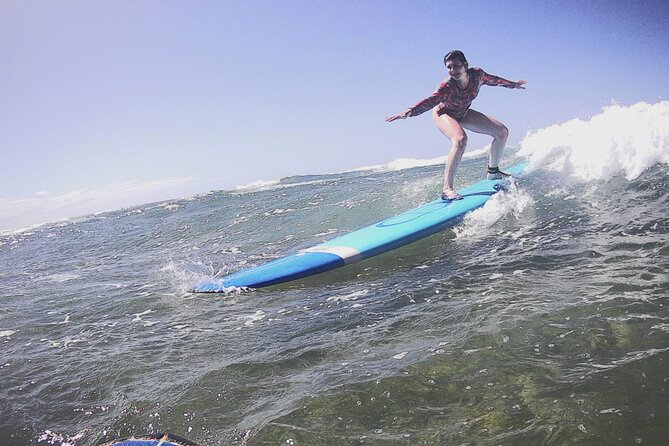
The cost is $150 per person for about two hours. That is not the cheapest way to spend time at the beach, but you are paying for instruction as well as equipment.
The included board, leash, and rash guard save you from arranging rentals separately. More important, you receive structured teaching on safety, paddling, pop-ups, wave choice, balance, and timing. If you are starting from zero, that guidance can prevent a lot of wasted effort and unsafe guesswork.
The private-group format strengthens the value. You are not paying to stand in a large class while an instructor cycles through many people. Your own group takes part, and the instructor can focus on your attempts. For a couple or family that wants a shared activity, the price may feel reasonable, especially if catching a first wave is a major goal.
The value is less clear if you already surf well and only want board time. In that case, a standard rental could be a better fit, but this activity is built around coaching rather than simply providing equipment.
The price does not include a swimsuit or reef-safe sunscreen. Bring both. You should also treat the rash guard as added protection, not a replacement for sunscreen on exposed skin.
Who will get the most from this lesson
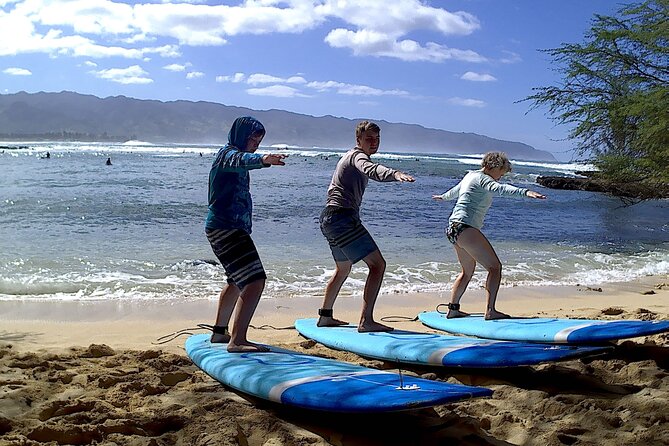
This lesson is a strong match for first-time surfers who want structure and close coaching. It also suits visitors who would rather learn with their own friends or family than join a large class.
You will likely benefit most if you:
- Want to learn the basics in a single, guided session
- Prefer practicing the pop-up before entering the water
- Need help with paddling and choosing small waves
- Are comfortable with moderate physical activity
- Want equipment supplied for you
- Prefer a private group rather than a public class
- Can swim comfortably, or arrange a life jacket in advance if needed
It may be less suitable if you want a relaxed beach outing with little exertion. Surfing involves repeated effort, and success is not guaranteed on every attempt. Conditions can also affect the lesson, and poor weather may lead to a cancellation or a new date.
Families should consider the swimming ability and physical comfort of each person. Service animals are allowed. Beach parks differ in accessibility, so contact the provider before booking if you need specific access arrangements.
North Shore details that make the lesson memorable
The lesson is centered on learning, but small moments can make it feel like more than a basic sports class. One group saw turtles swimming near their boards. That kind of encounter is possible in the North Shore’s coastal setting, but it should be treated as a lucky extra rather than part of the promised program.
The more reliable reward is the progression from uncertainty to control. You begin with a board, a leash, and a dry-land movement that may feel awkward. Then you paddle, try to match a wave, stand briefly, and learn what to change on the next attempt.
That progression is why the beach practice and patient coaching matter more than flashy claims. You are not just being placed on a board. You are learning the small decisions that make surfing safer and more enjoyable.
Booking timing and cancellation rules
This experience is often booked about 36 days ahead, so I would not leave it until the last minute if the lesson is important to your Oahu plans. Confirmation is received at booking, and the ticket is mobile.
You can cancel for a full refund up to 24 hours before the start time. Changes or cancellations within 24 hours are not accepted and are not refunded. The cut-off uses local time, so check the start time carefully.
Weather can affect the schedule. If poor weather cancels the lesson, you are offered another date or a full refund. The experience also requires a minimum number of participants. If that minimum is not met, you are offered another date or experience, or a full refund.
Should you book this Oahu surf lesson?
Book it if you want a first surf lesson with clear preparation, supplied gear, and an instructor who can focus on your own group. The dry-land pop-up work, patient coaching from Connor, and chance to receive help with each attempt make it a practical choice for beginners.
The $150 price is easier to justify when you value instruction and privacy, not just time in the water. Bring a swimsuit, reef-safe sunscreen, and enough energy for a physical session. If swimming is a concern, arrange a life jacket in advance.
Skip it if you only want to rent a board or spend a quiet two hours on the beach. But if catching your first wave on Oahu is a priority, this lesson gives you a sensible, supportive way to try.
FAQ
Where does the surf lesson begin?
The lesson begins at Kahalewai Place, Kahalewai Place, Haleiwa, Hawaii 96712. The activity ends back at the meeting point.
How long does the lesson last?
The lesson lasts approximately two hours.
What equipment is included?
A surfboard, surf leash, and rash guard are provided.
What should I bring?
Wear your own swimsuit and bring reef-safe sunscreen. The rash guard helps protect your arms and shoulders, but it does not replace sunscreen.
Can I request a life jacket?
Yes. If you struggle with swimming, request a life jacket in advance.
What happens if bad weather cancels the lesson?
You will be offered a different date or a full refund. A full refund is also available if you cancel at least 24 hours before the experience start time. Cancellations within 24 hours are not refunded.
Just added around Oahu
- Kevo’s Beach Bus★ 5.0 · 3 reviews
- 2hr Luxury Private Sailing Catamaran for 7-12 People★ 5.0 · 3 reviews
- Mokulua Islands Self-Guided Kayak Adventure★ 3.5 · 3 reviews
- Night Ninja Adventure Course in Kapolei★ 3.5 · 3 reviews
- Surf Lessons get your Social Media video & photos you Surfing HI.★ 5.0 · 3 reviews
- Arrival Lei Greeting –HNL to Waikiki Private Transfer★ 5.0 · 3 reviews
- Private “Limousine” USS Arizona Memorial & Cultural Honolulu Tour★ 5.0 · 3 reviews
- (2nd)Diamond Head Hike w/ Malasada Starts at 7:00 a.m.★ 3.3 · 3 reviews
North Shore Tours, compared.
Oahu Grand Circle Island and Haleiwa Tour: 9-Hr Deluxe Experience
Read our review →
Oahu Circle Island Tour with Waimea Waterfall
Read our review →
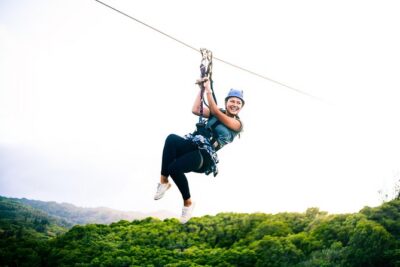
Oahu’s North Shore: 8-Line Zipline Adventure
Read our review →

All Inclusive Ultimate Circle Island Tour, Waimea Falls & Lunch
Read our review →
Oahu North Shore Experience: Activities, Waterfall & Free Time
Read our review →
Browse the lists this tour appears in