
Reviewed · OAHU
Hawaii Volcanoes National Park Experience from Oahu
Seeing Hawaiʻi Volcanoes National Park in one day from Oahu is the main event here, but the route gives you far more than a quick crater photo. You fly to Kona, cross the southern half of the Big Island, taste Kona coffee, look for green sea turtles at Punaluʻu, and walk through a lava tube before flying home.
I especially like two things: the small-group vehicle experience, which makes a long day easier than renting a car, and the guides. Mel and Henry are praised for clear explanations of volcano science, Hawaiian culture, and local stories. The main drawback is time. With flights and several hours on the road, this is an ambitious day, not a relaxed island outing.
In This Review
- Key points to know before booking
- Why this Big Island day trip works
- Landing at Kona and meeting your guide
- Greenwell Farms and the Kona coffee country
- Manuka State Wayside Park and a short forest walk
- Punaluʻu Bake Shop for lunch
- Punaluʻu Black Sand Beach and green sea turtles
- Hawaiʻi Volcanoes National Park in two focused hours
- The long return route through the Big Island
- What to pack for comfort and safety
- Is $589.99 a fair price?
- Who should book this experience?
- Should you book it?
- FAQ
- Is airfare from Oahu included?
- Is transportation to Honolulu Airport included?
- Where do I meet the tour in Kona?
- What time does the Kona portion begin?
- Are meals included?
- Can I see active lava?
- Is the tour suitable for people with respiratory problems?
Key points to know before booking
- Round-trip airfare from Honolulu to Kona is included, but you must arrange your own transportation to Honolulu Airport.
- The volcano park receives the strongest focus, with about two hours for the visitor center, crater views, lava tube, rainforest, and steam vents.
- Greenwell Farms offers a useful Kona coffee stop, though you may prefer more crater time if coffee is not a priority.
- Punaluʻu Black Sand Beach can deliver the day’s most surprising wildlife moment, since green sea turtles often rest on the shore.
- The route involves lots of van time, so bring water, snacks, and a light rain jacket.
- Volcanic conditions change, and you are not guaranteed to see active lava or an eruption.
Why this Big Island day trip works
The appeal is efficiency. The Big Island is enormous, and Hawaiʻi Volcanoes National Park is not close to Kona Airport. On your own, you would need to arrange a flight, rent a car, learn the roads, plan fuel and food stops, and keep a close eye on park conditions.
Here, an air-conditioned vehicle and local guide handle the driving after you land. You can look out the window, listen to stories, and let someone else deal with the route. The tradeoff is a tightly packed schedule. You will cover a lot of ground, but you will not have much freedom to linger.
The tour costs $589.99 per person, which is a serious price. Still, the airfare is included, as is park admission, airport pickup at Kona, and a full day of transport and guiding. Compared with buying a flight, rental car, fuel, park entry, and guide service separately, the price can make sense for a one-day Big Island visit.
It is best value if you have only one day available and want to reach the volcano without planning every detail yourself. It is less appealing if you already have several days on the Big Island or would rather spend a full day hiking at the park.
A few more Honolulu days out worth weighing up
- Hawaii Volcanoes National Park Experience Departing from Oahu
★ 5.0 · 240 reviews - Oahu to Big Island Volcanoes National Park Adventure Tour
★ 4.1 · 8 reviews
Landing at Kona and meeting your guide
The day begins at Kona International Airport at about 8:00 a.m. The stated meeting point is the lot behind Alaska Baggage Claim B-2, at 73-200 Kupipi Street in Kailua-Kona.
You need to handle transportation to Honolulu International Airport on your own. That extra step matters, especially if you are staying outside Waikīkī or have an early flight. Build in enough time for airport arrival, since a missed flight would affect the entire day.
After meeting the group in Kona, you travel in an air-conditioned vehicle. The maximum group size is 22, so this is not necessarily an intimate private tour in the classic one-family-only sense. The experience does offer a customized route and a private vehicle for the group, but you should confirm the exact group arrangement if privacy is important to you.
The guide is a major part of the day. Mel is often singled out for his explanations of volcanoes, Hawaiian culture, and island life. Henry is also praised for sharing island stories and explaining the science behind volcanic activity. The company has also referred to a guide named Mike, so your guide may vary by date.
The style can be structured. One account describes a guide with a firm, military-influenced manner, particularly when keeping people on schedule. That approach helps on a day with flights and many stops, but it may feel brisk if you prefer a loose, unhurried pace.
Greenwell Farms and the Kona coffee country
Greenwell Farms is a 30-minute stop on the slopes of Mauna Loa. The farm dates to 1850 and is one of the established coffee producers in the Kona district.
You will learn why Kona coffee grows well here. The area has volcanic soil, sunny mornings, cloud cover in the afternoon, and regular rainfall. Those conditions help create the flavor and quality associated with Kona coffee.
This stop adds a welcome local connection to the day. You are not simply rushing from airport to volcano. You get a look at one of the Big Island’s best-known agricultural products and a sense of how the slopes around Kona are used.
The limitation is time. Thirty minutes is enough for an introduction, but not a long farm visit. One piece of feedback suggested the coffee stop felt too long when the park was the main goal. If your priority is volcanic scenery, you may wish this stop were shorter. If you enjoy food, farming, and local products, it gives the day useful balance.
Manuka State Wayside Park and a short forest walk
Manuka State Wayside Park is a quiet 13-acre stop along Highway 11. It sits on the slopes of Mauna Loa, where wet and dry forest areas meet.
The two-mile Manuka Nature Trail offers native plants, volcanic features, and signs explaining the area’s ecology. The scheduled stop is about 30 minutes, so you should not expect to complete the full trail. Instead, this is a brief chance to stretch your legs and see a less developed side of the island.
That makes it a good counterpoint to the more famous park sights. You get forest, volcanic ground, and native Hawaiian plant life without a major attraction crowding the view. The stop also breaks up the long drive south.
Wear closed-toe shoes. Volcanic ground can be uneven and sharp, and sandals are a poor choice for even short walks. The trail may also be damp, since weather shifts quickly along the slopes.
A different sort of day, same island:
- Oahu Grand Circle Island and Haleiwa Tour: 9-Hr Deluxe Experience
★ 5.0 · 17,387 reviews - Oahu: Grand Tour Around Island 16 Locations plus Snorkeling
★ 5.0 · 8,669 reviews - Salute to Pearl Harbor Including USS Arizona
★ 4.5 · 7,433 reviews - Majestic Circle Island Tour with Lunch
★ 5.0 · 7,014 reviews
Punaluʻu Bake Shop for lunch
Punaluʻu Bake Shop in Nāʻālehu is known as the southernmost bakery in the United States. It opened in 1991 and sells Hawaiian sweet bread in flavors such as taro, guava, and mango, along with other baked goods and local treats.
The tour uses the bakery as the lunch stop. Options include sourdough sandwiches, kalbi beef, Hawaiian plate lunches, and fresh bakery items. Meals are not included in the tour price, so plan to pay for your own food.
I like this stop because it gives you a taste of the southern Big Island rather than another generic highway meal. The garden and gift shop add a little breathing room, and the baked goods are an easy way to bring a local snack onto the road.
You should also be realistic about the timing. If several tour groups arrive together, ordering food may take longer than expected. One day’s account found the bakery overloaded and the lunch stop disappointing. Bring a snack in your bag, and do not rely on lunch as your only food for the day.
Cash is worth carrying for roadside stands, food trucks, and small shops. Some may not accept cards.
Punaluʻu Black Sand Beach and green sea turtles
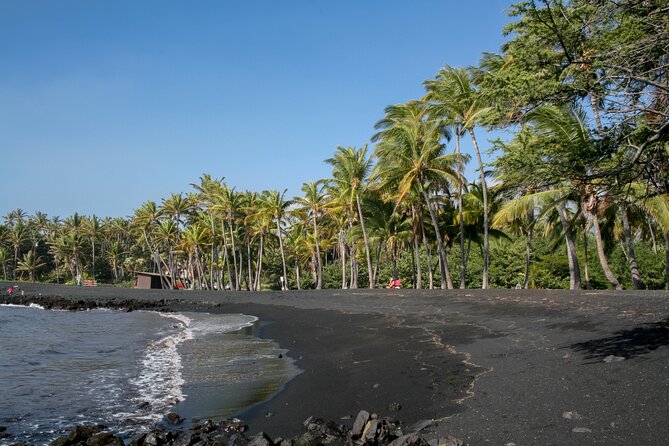
Punaluʻu is one of the Big Island’s most memorable coastal stops. The sand is black because volcanic basalt has broken down along the shore. Coconut palms and dark volcanic rock frame the beach, creating a sharp contrast with the usual pale sand image of Hawaii.
This is also one of your best chances to see Hawaiian green sea turtles resting on the beach. You may get lucky and see one or more close to shore. Keep your distance and do not touch or disturb them.
Swimming is not the main reason to come here. The water can be rough, and the beach is better suited to a short walk, photographs, and a look at the volcanic coast. The scheduled stop is about 30 minutes, which is enough to see the beach and search for turtles if conditions cooperate.
For many people, this becomes the unexpected favorite of the day. The volcano park is the headline attraction, but a sea turtle resting on black sand is a vivid, very Hawaiian moment. Just remember that wildlife sightings are never guaranteed.
Hawaiʻi Volcanoes National Park in two focused hours
The park receives about two hours, with admission included. That is not enough for a full park exploration, but a good guide can use it well.
You begin at the visitor center, where you can get basic context about the park’s geology, eruptions, and cultural importance. This helps you understand what you are seeing instead of treating each crater and lava formation as a random rock field.
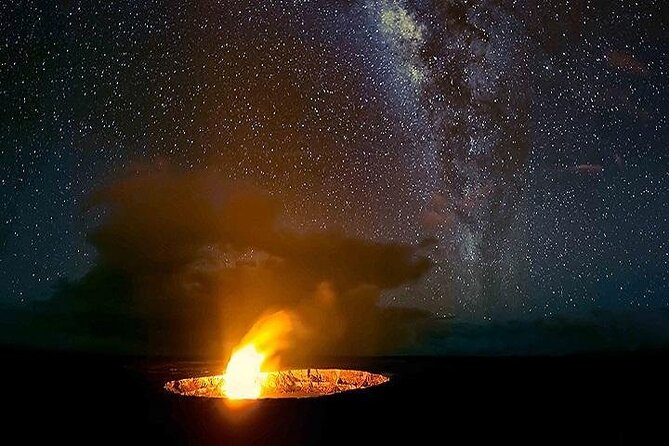
At Halemaʻumaʻu Crater, you may see a crater glow or signs of recent volcanic activity. Conditions change, and active lava is not guaranteed. Several people have had the thrilling luck of seeing an eruption, while others have found the park powerful even without visible lava.
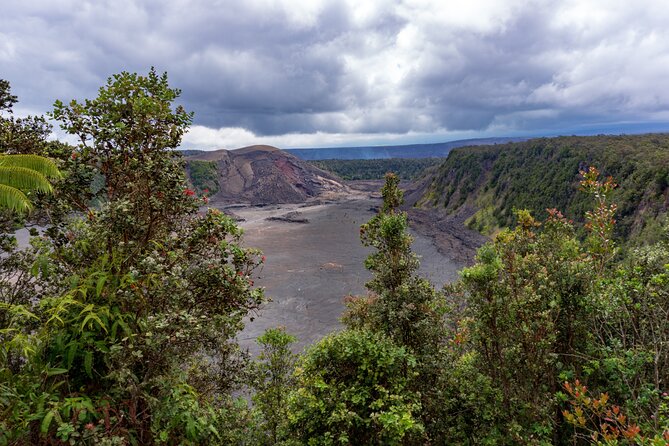
The Kīlauea Iki Rainforest Lookout shows one of the park’s best contrasts: dense rainforest around a broad crater formed by an earlier eruption. A trail crosses the crater floor, but the short tour stop usually gives you a viewpoint and only a brief walk rather than time for the entire hike.
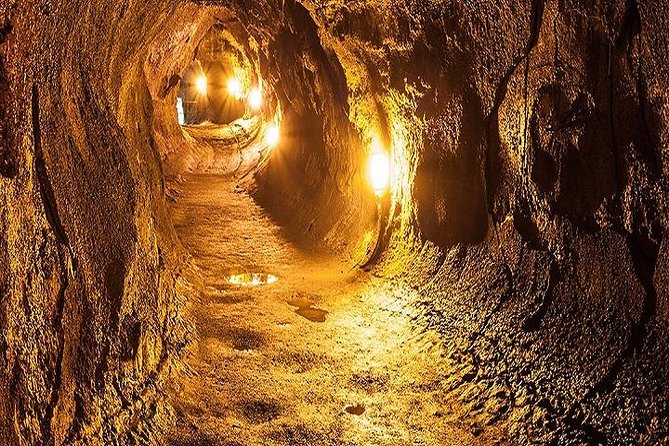
The Thurston Lava Tube is one of the day’s most accessible volcanic features. Lava once flowed through this natural tunnel, leaving a hollow passage behind. It is an easy-to-grasp example of how an eruption can reshape the island, and it often becomes a favorite stop for families.
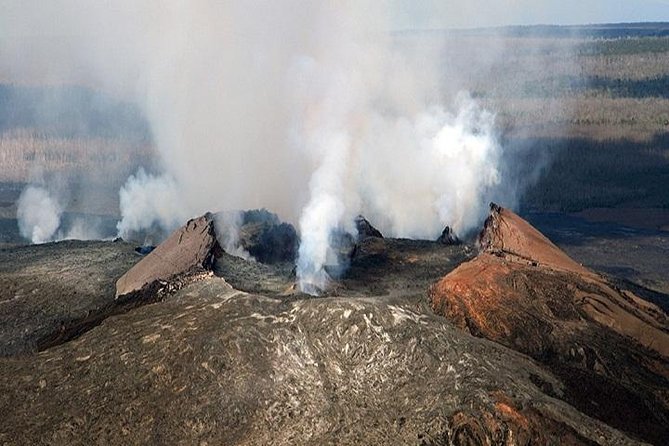
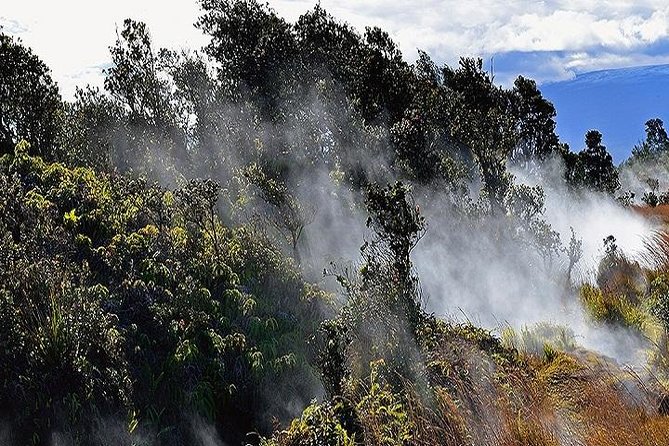
Steam vents offer another direct reminder that the ground below is active. You may feel heat rising from the earth, though conditions can vary. Volcanic gases, including sulfur dioxide, can irritate the lungs, especially if you have asthma or another respiratory condition. Follow park instructions and stay on marked paths.
The park is also a culturally important place for Native Hawaiians. Do not remove rocks, plants, or other objects. Treat marked sites with care, and remember that this is not simply a scenic stop.
The long return route through the Big Island
The route can include views and commentary related to Mauna Kea, the Kohala Coast, and Hilo. These sections help you see how quickly the island changes from Kona’s drier coffee country to forest, volcanic ground, and wetter eastern districts.
Mauna Kea Access Road climbs from Saddle Road toward the summit of Mauna Kea. You may see the road and changing terrain from lower elevations, but the supplied schedule does not promise a summit visit. At higher elevations, weather can turn cold and wet, so layers are useful even when Honolulu feels hot.
The Kohala Coast is known for beaches, resorts, and a drier climate. It is a reminder that the Big Island has several weather zones, often within a single day of driving.
Hilo adds cultural and historical context. Places associated with the town include the Lyman Museum, Hilo’s historic district, the Pacific Tsunami Museum, Liliʻuokalani Gardens, and the Hilo Farmers Market. These may be part of the guide’s narration or views along the route, but they are not listed as dedicated stops with admission time. Do not book this tour expecting a full Hilo sightseeing visit.
The amount of road time is the day’s central compromise. You can cover the southern half of the island in one outing, but you will spend plenty of time seated. The payoff is variety. Coffee, forest, bakery food, black sand, turtles, craters, lava, and steam vents all fit into one ambitious loop.
What to pack for comfort and safety
Pack light, but pack intelligently. I would bring:
- A rain jacket and an extra layer
- Closed-toe walking shoes
- Water and snacks
- Sunscreen and a hat
- Cash for food stands and small shops
- A downloaded map or park guide
Cell service can be limited or absent in parts of the park. Do not depend on your phone for directions or communication. Your guide handles the route, but downloaded information is still useful.
The weather can shift quickly, especially near higher elevations and in the park. A light jacket may be unnecessary at the airport and essential later in the day.
Car seats are available for children age four and under. Most people can participate, but the day includes vehicle time, short walks, uneven volcanic ground, and possible exposure to volcanic gases. Anyone with respiratory problems should take the sulfur dioxide warning seriously.
Is $589.99 a fair price?
The price is high, but the inclusions are substantial. You receive round-trip airfare between Honolulu and Kona, airport pickup in Kona, an air-conditioned vehicle, park admission, and a guide who provides narration throughout the day.
The value is strongest when you have only one day for the Big Island. You avoid renting a car and driving unfamiliar roads after a flight. You also gain context that can make the volcano park easier to understand.
The value drops if you already plan to spend several nights on the Big Island. In that case, you could spread the park visit over more time and choose your own stops. You would also have more control over meals, hiking, and how long you stay at each viewpoint.
At 8 to 10 hours, the tour is a full commitment. Add your transportation time to and from Honolulu Airport, and this becomes a very long day. Still, the chance to see Kīlauea, Punaluʻu, and Kona coffee from Oahu is difficult to match with a simple half-day excursion.
Who should book this experience?
I would choose this tour if you are staying on Oahu, have limited time, and place a high value on seeing the Big Island’s volcanoes. It is also a strong fit for families who want transportation and guiding handled for them, provided everyone can manage a long day.
It suits people who enjoy learning along the way. Mel and Henry are praised for explaining geology, Hawaiian culture, and island stories in a way that keeps the drive interesting. If you prefer quiet roads and independent wandering, the steady narration and fixed schedule may feel like too much.
I would think twice if you have asthma or other breathing problems, if long vehicle days leave you miserable, or if your main goal is a long hike inside the park. I would also bring backup food rather than depend entirely on the bakery lunch stop.
Should you book it?
Book this day trip if Hawaiʻi Volcanoes National Park is high on your list and you want to reach it from Oahu without arranging the complicated pieces yourself. The combination of airfare, transport, park entry, local commentary, black sand, turtles, and coffee makes the price defensible for a one-day visit.
Do not book it expecting a leisurely park day or guaranteed lava. You will cover a great deal of ground, and flight delays, weather, road conditions, or volcanic changes can affect the plan. With sensible expectations, good shoes, snacks, and a rain jacket, this is one of the more efficient ways to see the Big Island’s southern sights in a single day.
Free cancellation is available up to 24 hours before the start time. Changes or cancellations inside that window are not refunded, and poor weather or failure to meet the minimum group size may lead to a new date or full refund.
FAQ
Is airfare from Oahu included?
Yes. Round-trip airfare between Honolulu International Airport and Kona International Airport is included.
Is transportation to Honolulu Airport included?
No. You must arrange your own transportation to Honolulu International Airport.
Where do I meet the tour in Kona?
Meet at the lot behind Alaska Baggage Claim B-2 at Kona International Airport, 73-200 Kupipi Street, Kailua-Kona.
What time does the Kona portion begin?
The stated start time is 8:00 a.m. at Kona International Airport.
Are meals included?
No. Meals are at your own expense. The tour stops at Punaluʻu Bake Shop, where you can buy sandwiches, kalbi beef, Hawaiian plate lunches, baked goods, and other food.
Can I see active lava?
You might see an eruption or a crater glow, but active lava is not guaranteed. Volcanic conditions can change.
Is the tour suitable for people with respiratory problems?
Use caution. Volcanic gases such as sulfur dioxide can worsen asthma and other respiratory conditions. Follow safety instructions and stay on marked trails.
Just added around Honolulu
- Kevo’s Beach Bus★ 5.0 · 3 reviews
- Arrival Lei Greeting –HNL to Waikiki Private Transfer★ 5.0 · 3 reviews
- Private “Limousine” USS Arizona Memorial & Cultural Honolulu Tour★ 5.0 · 3 reviews
- Private Full-Day Circle Island Guided Small-Group up to 6 (Se habla Español)★ 5.0 · 3 reviews
- Waikiki: Sunset Swim & Sailing Experience★ 4.5 · 3 reviews
- Private Customizable Grand Circle Island Tour on Oahu★ 5.0 · 3 reviews
- Pearl Harbor USS Arizona & Bowfin Submarine★ 4.5 · 3 reviews
- Oahu : Hanauma Bay Reservation+Equipment Rental★ 3.3 · 3 reviews