
Reviewed · LUAU SHOWS
Immersive Luau Experience
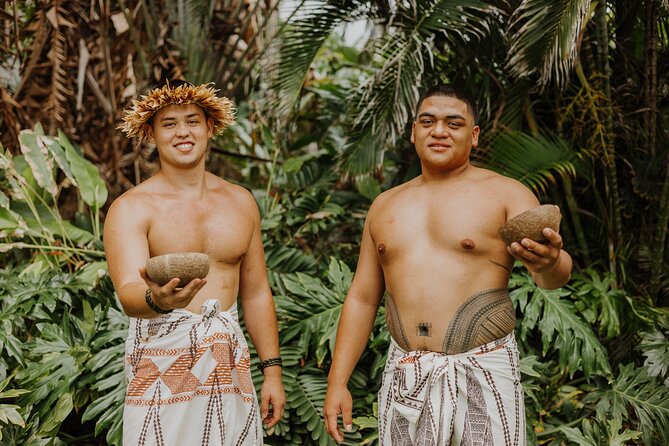
The best part of this Oahu luau is that you do not simply sit down, watch a show, and eat from a buffet. You help prepare an imu rock oven, weave a ti leaf lei, pound kalo into poi, and learn pieces of Samoan fireknife performance. It feels more like being welcomed into a family gathering than attending a stage production.
I like the hands-on approach, especially the chance to connect food with malama aina, caring for the land, and aloha aina, love for the land. I also like the relaxed family welcome, beginning with a traditional Oli Aloha chant and continuing through cooking, crafts, music, and dance.
The main consideration is location. The meeting point is in Hauula, so this is not a quick Honolulu luau. You need to allow time for the drive, and the 4:00 pm start makes this best suited to an evening when you are already exploring Oahu’s northeast side.
In This Review
- Key details before you book
- A luau where you take part, not just watch
- Preparing the imu in Hauula
- Weaving a ti leaf lei
- Pounding kalo and learning about poi
- Samoan fireknife dance and drumming
- Dinner from the imu and Fat Poi
- The welcome and group atmosphere
- Is Hauula worth the drive from Honolulu?
- Weather, cancellation, and timing
- Who will enjoy this Oahu experience?
- Should you book the Immersive Luau Experience?
- FAQ
- Where does the Immersive Luau Experience take place?
- What time does the experience begin?
- How long does the luau last?
- What activities are included?
- Is food included?
- What is the maximum group size?
- Can I cancel for a full refund?
Key details before you book
- Prepare an imu with the ohana: You help with the traditional underground-style rock oven before it is opened for the meal.
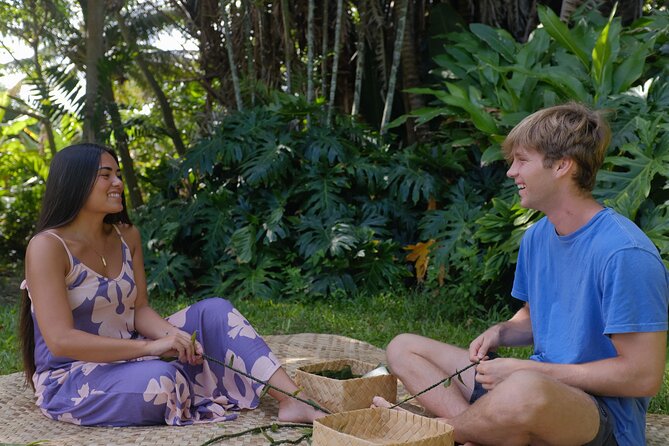
- Make a ti leaf lei: This hands-on craft gives you something personal to take home, along with the memory of making it.
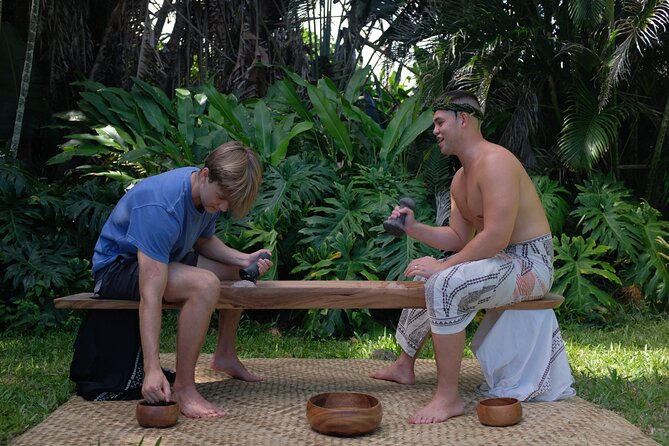
- Pound kalo into poi: You learn how this basic Hawaiian food is prepared rather than simply finding it on a plate.
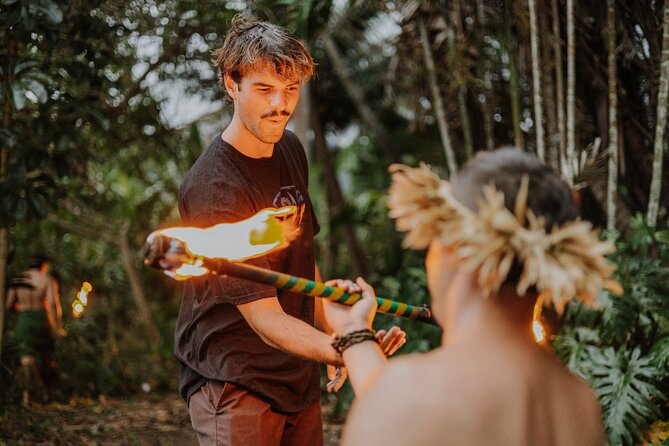
- Try Samoan fireknife skills: The program includes fireknife dancing and fireknife drumming, adding a Samoan cultural element to the evening.
- Eat food from the imu and Fat Poi: The meal combines food cooked in the imu with catering from the locally known Hawaiian food truck Fat Poi.
- Plan around Hauula and a 4:00 pm start: The experience lasts about two and a half hours and ends where it begins.
A luau where you take part, not just watch
Many luaus follow a familiar pattern: arrive, eat, watch dancing, and leave. This experience takes a different route. The cultural activities come first, and you are invited to participate in them.
That difference matters. Weaving a ti leaf lei is not the same as seeing one placed around your neck. Pounding kalo into poi gives you a physical sense of the work behind a Hawaiian staple. Helping prepare the imu makes the final meal feel connected to a process, not just a serving line.
The welcome begins with an Oli Aloha, a traditional Hawaiian chant. From there, the Oahu Experiences ohana introduces activities connected to food, land, craft, music, and performance. The tone is intended to be friendly and informal, with families and children able to take part.
The small number of published ratings should make you cautious about treating the perfect score as a guarantee. Still, the praise is consistent on the points that matter most: the warm welcome, good food, relaxed atmosphere, and strong appeal for families. One family found the activity especially enjoyable for a child named Kala’i, while another said the children had a great time.
More luaus and island shows:
- Paradise Cove Luau
★ 4.5 · 4,498 reviews - Toa Luau at Waimea Valley, Oahu
★ 5.0 · 3,350 reviews - Chief’s Luau Admission
★ 4.5 · 3,018 reviews
Preparing the imu in Hauula
The imu is the heart of the evening. An imu is a traditional rock oven used to cook food in the ground. Here, you do not merely hear a short explanation before dinner. You help prepare it with the hosts.
That work gives the meal some context. Heat, rocks, earth, and time all play a role in the cooking. You can better appreciate the food when you have seen the preparation that comes before the imu is opened.
The experience also connects the oven to ideas of malama aina and aloha aina. These terms describe caring for the land and loving the land. They are not treated as abstract slogans. They are tied to food preparation and the way traditional practices depend on respect for natural resources.
You should expect this part to be active and communal rather than polished like a museum demonstration. If you want a quick dinner with a professional stage show, the pace may feel less direct. If you enjoy learning by doing, this is one of the strongest reasons to choose this activity.
Later, the ohana opens the imu and serves food from it. That moment gives the evening a clear payoff, since you have watched the cooking process develop from the beginning.
Weaving a ti leaf lei
Lei making adds a creative pause to the cooking activities. You learn to weave a lei from ti leaves, a plant with an important place in Hawaiian life.
This is a useful activity for several types of visitors. Families can work together, children can focus on a practical craft, and adults who prefer cultural activities to staged entertainment get time to make something with their hands. You also leave with a keepsake that is tied to the evening itself.
Do not expect a long formal craft workshop with advanced instruction. The available details describe an opportunity to learn how to weave and make a ti leaf lei, but they do not specify the exact design, teaching time, or level of difficulty. The safest expectation is a guided introduction rather than a full craft course.
I would pay attention to the explanation as well as the finished lei. The value here is not simply the object. It is the chance to understand a little more about a traditional material and the care involved in working with it.
Pounding kalo and learning about poi
Kalo, also called taro, is pounded into poi during the activity. Poi is a basic Hawaiian food, and this demonstration gives you a direct connection to how it is made.
The texture and flavor of poi can surprise first-time tasters. Some people enjoy it at once, while others need time to understand it. That is part of the point. Instead of judging it from a small serving on a plate, you see the labor and tradition behind it.
The hands-on element also helps explain why food is central to Hawaiian culture. The meal is not separated from the land, farming, tools, and community work that make it possible. The references to caring for the land fit naturally with this part of the program.
This is likely to be a better fit for curious eaters than for anyone seeking only familiar food. The catered meal includes Hawaiian food, and the experience specifically includes poi, so you should arrive open to trying local dishes.
A different sort of day, same island:
- Oahu Grand Circle Island and Haleiwa Tour: 9-Hr Deluxe Experience
★ 5.0 · 17,387 reviews - Oahu: Grand Tour Around Island 16 Locations plus Snorkeling
★ 5.0 · 8,669 reviews - Parasailing Experience in Waikiki, HI
★ 5.0 · 7,692 reviews - Salute to Pearl Harbor Including USS Arizona
★ 4.5 · 7,433 reviews
Samoan fireknife dance and drumming

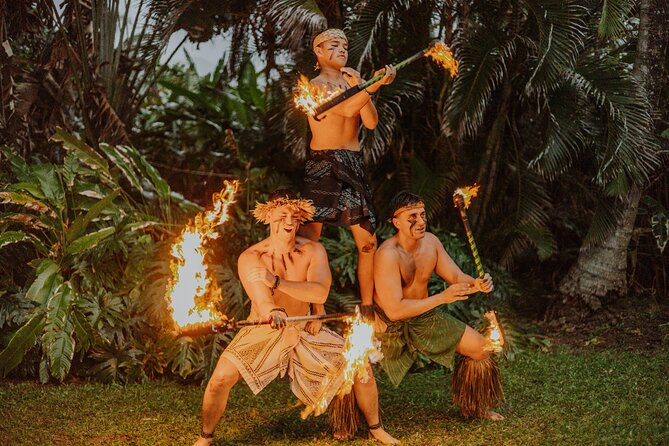
The entertainment portion includes instruction in Samoan fireknife dance and fireknife drumming. The information provided does not say exactly how long the lesson lasts or how much each person will perform, so think of this as an introduction rather than professional-level training.
Even a short lesson can change how you watch the final performance. Rhythm, movement, and coordination become easier to appreciate after you have tried the basic idea yourself. The drumming also gives the evening a lively group activity between the food preparation and meal.
The Samoan element is important. This is not presented as Hawaiian culture alone, and the fireknife portion broadens the evening to include another Pacific Island tradition. You should not expect every part of the program to receive equal time, but the mix gives the experience more variety than a meal followed by a single dance show.
Families may find this section especially appealing. One of the strongest practical signals from the available feedback is that children enjoyed the overall experience, and fireknife drumming offers an active break from sitting and listening.
Dinner from the imu and Fat Poi
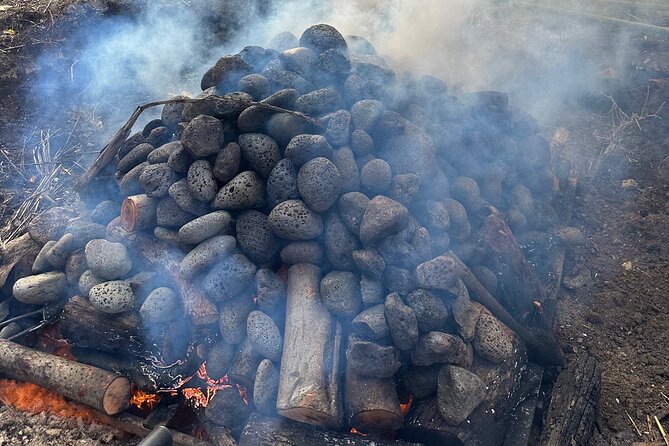
When the imu is opened, the ohana serves traditional Hawaiian food prepared there. Additional food is catered by Fat Poi, a locally famous Hawaiian food truck.
That combination is useful because the meal is linked to the activity while still offering more than one source of food. The imu provides the traditional cooking experience, and Fat Poi adds a local food-truck element. The available feedback specifically praises the food as ono, a Hawaiian word for delicious.
The meal is one of the clearest value points in the $175 price. You are not paying only for a performance or a restaurant dinner. The cost covers a roughly two-and-a-half-hour cultural program, several hands-on activities, instruction, entertainment, and food.
Still, $175 per person is a serious expense. I would compare it with what you want from a luau. If you mainly want a large production with elaborate costumes and a long dance show, another Oahu option may suit you better. If you want a personal, activity-based evening with food included, the price is easier to justify.
No menu details are provided, so do not book this expecting a specific dish or guaranteed accommodation for dietary needs unless you confirm directly before booking.
The welcome and group atmosphere
The hosts greet you as ohana, or family, and the opening Oli Aloha sets that tone immediately. The available feedback repeatedly points to the welcome and relaxed mood as major strengths.
That atmosphere can make a big difference. A cultural activity works better when you feel invited to participate rather than tested on what you already know. The hosts appear to focus on explanation, encouragement, and shared activity.
The group can include up to 50 people. That is not an intimate private lesson, but it is also smaller than some large resort productions. Your experience may depend on where you are positioned and how many people are taking part in each activity at the same time.
Families should find the format approachable. The feedback describes children enjoying the food and activities, and the program has enough variety to keep the evening moving. Couples and solo visitors can also enjoy it, especially if they prefer meeting people through a shared activity rather than sitting through a formal show.
Is Hauula worth the drive from Honolulu?
The meeting point is 53 Puhuli Street in Hauula, on Oahu’s northeastern side. The activity begins at 4:00 pm and finishes back at the same meeting point.
You need to plan the drive carefully. The experience does not include a stated pickup service, and no transportation details are provided. If you are staying in Honolulu, the location can take meaningful time and may involve traffic. One practical assessment from the available feedback is that the drive is worthwhile for people who value the experience itself.
I would pair this booking with time on Oahu’s northeast side rather than crossing the island only for dinner. That makes the schedule feel less rushed and lets you treat the luau as the evening stop in a day of exploration.
The mobile ticket is convenient. Confirmation arrives when you book, and the activity is near public transportation. Service animals are allowed, and most people can participate. The group limit is 50, which helps define the scale but does not guarantee a quiet or private setting.
Weather, cancellation, and timing
The experience depends on good weather. If poor weather forces a cancellation, you are offered a different date or a full refund. The same choice applies if the minimum number of participants is not reached.
You can cancel for a full refund up to 24 hours before the 4:00 pm start time. Changes or cancellations made within 24 hours are not accepted and are not refunded. The cutoff uses local Oahu time, so check the clock carefully if you are making changes from elsewhere.
The two-and-a-half-hour duration is long enough for several activities without taking up the entire evening. You should still avoid booking another fixed event immediately afterward, since the cooking, activities, and meal are meant to unfold as one shared program.
Who will enjoy this Oahu experience?
I would recommend this for you if you want:
- A participatory cultural activity instead of a show-only luau
- A family-friendly evening with crafts, food, music, and movement
- A first introduction to poi, kalo, lei making, and the imu
- A relaxed setting with a local ohana feel
- A Samoan fireknife experience alongside Hawaiian traditions
- A reason to spend part of your day in Hauula
I would be more cautious if you want a grand resort production, a long formal dance performance, a fully specified menu, or a short and easy outing from Waikiki. The program is strongest when you value participation and cultural explanation over polish and scale.
Should you book the Immersive Luau Experience?
Book it if you want to work with your hands, try Hawaiian food, and understand a little of the process behind the culture. The imu, ti leaf lei, kalo pounding, poi, and fireknife activities give the evening real substance.
Skip it if the Hauula location is inconvenient or if $175 feels too high for a smaller, activity-led program. For families and curious eaters, the cost can be fair because food, instruction, entertainment, and several cultural activities are bundled together.
My practical advice is to reserve early. The experience is booked an average of 151 days ahead, which suggests that available dates may disappear well before your trip. Confirm the schedule, allow plenty of driving time, and arrive ready to participate rather than simply watch.
FAQ
Where does the Immersive Luau Experience take place?
It takes place at 53 Puhuli Street, Hauula, Hawaii 96717. The activity ends back at the same meeting point.
What time does the experience begin?
The start time is 4:00 pm.
How long does the luau last?
The experience lasts approximately 2 hours and 30 minutes.
What activities are included?
You can help prepare an imu rock oven, learn to weave a ti leaf lei, pound kalo into poi, learn about malama aina and aloha aina, and take part in Samoan fireknife dancing and drumming.
Is food included?
Yes. The ohana serves traditional Hawaiian food from the imu, along with additional food catered by Fat Poi.
What is the maximum group size?
The activity has a maximum of 50 participants.
Can I cancel for a full refund?
Yes. You can cancel at least 24 hours before the start time for a full refund. Cancellations or changes made less than 24 hours before the start time are not accepted or refunded.
Just added around Oahu
- Mokulua Islands Self-Guided Kayak Adventure★ 3.5 · 3 reviews
- Kevo’s Beach Bus★ 5.0 · 3 reviews
- 2hr Luxury Private Sailing Catamaran for 7-12 People★ 5.0 · 3 reviews
- Night Ninja Adventure Course in Kapolei★ 3.5 · 3 reviews
- Arrival Lei Greeting –HNL to Waikiki Private Transfer★ 5.0 · 3 reviews
- Private “Limousine” USS Arizona Memorial & Cultural Honolulu Tour★ 5.0 · 3 reviews
- Surf Lessons get your Social Media video & photos you Surfing HI.★ 5.0 · 3 reviews
- (2nd)Diamond Head Hike w/ Malasada Starts at 7:00 a.m.★ 3.3 · 3 reviews
Luau Shows, compared.


Mauka Warriors Luau Honoring Polynesia’s Forgotten History
Read our review →
Waikiki Luau Buffet with Optional Rock-A-Hula Show Ticket
Read our review →
Ka Moana Lūʻau at Aloha Tower – Oceanfront Luau Show
Read our review →
Ka Moana Luau Dinner and Show at Aloha Tower
Read our review →
Browse the lists this tour appears in