
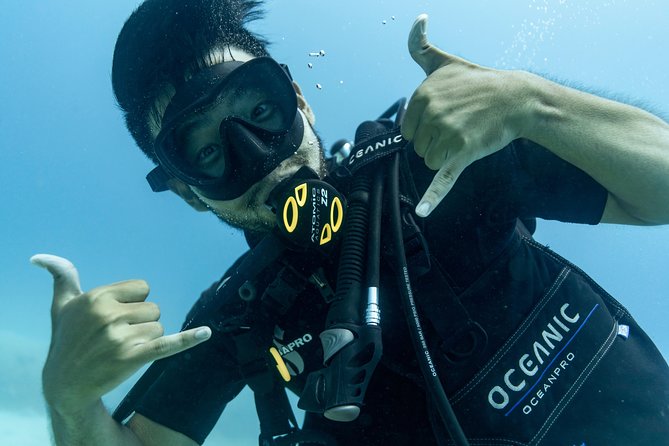
Reviewed · SEA TURTLE TOURS
Incredibly Fun Coral Reef Giant Sea Turtles 4hour Boat Scuba Tour
Oahu’s big draw here is not a resort pool or a quick beach lesson. You board a boat for two real ocean scuba sessions, descending along a line to shallow coral sites where sea turtles may cruise past, eels hide in the reef, and rays or octopus sometimes appear. The water is warm, and the underwater world feels wonderfully close to Waikiki.
I like the patient one-on-one coaching, especially for first-timers who need time to get comfortable breathing through a regulator. I also like the practical setup: full equipment, water, snacks, a maximum of 16 people, and instructors such as Josh, Olga, Chad, and Red who are repeatedly praised for calm safety checks. The main caution is that sea life and visibility depend on weather, and some reports describe rushed instruction or an early return.
In This Review
- Key points to know before booking
- What this Oahu boat outing really is
- Starting at Waikiki Dive Center
- From Waikiki to the boat
- Learning the basics before entering open water
- The first session: skills, nerves, and the rope descent
- The second session: turtles, reef fish, and small surprises
- What the crew adds to the morning
- Is $299 a fair price?
- Timing, cancellations, and flight planning
- Who should book this Oahu scuba tour?
- Should you book it?
- FAQ
- Where does the scuba tour meet?
- How long does the activity last?
- Do I need scuba certification?
- What marine life might I see?
- What is included in the $299 price?
- Can I fly soon after the tour?
- What happens if I need to cancel?
Key points to know before booking
- Two ocean sessions, not a short pool demonstration: Plan for a genuine boat-based introduction at roughly 40 to 60 feet.
- Sea turtles are the main attraction: You might also see eels, octopus, rays, reef sharks, urchins, and tropical fish.
- Patient instruction matters: Josh, Olga, Chad, Red, and other crew members have been singled out for helping nervous or rusty scuba participants.
- Medical clearance can affect your plans: Some health conditions require a doctor’s consent before check-in.
- Do not schedule a flight too soon afterward: Allow at least 18 hours after the shallow two-tank outing.
- The price reflects a full morning on the ocean: At $299 per person, it is best value for someone who wants a serious first taste of scuba rather than a quick tourist activity.
What this Oahu boat outing really is
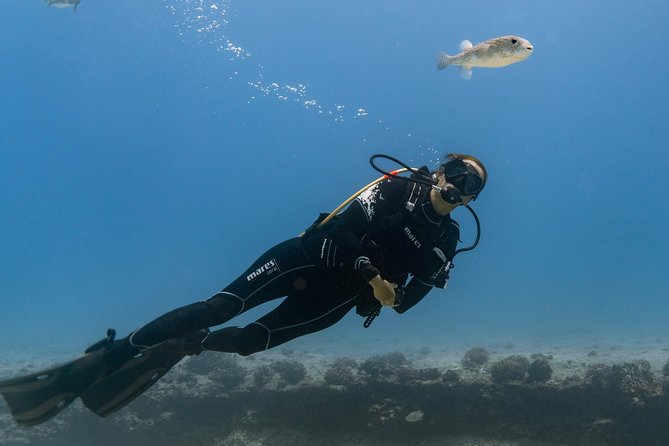
This is a four-hour scuba introduction based at Waikiki Dive Center, with the meeting point at 424 Nāhua Street in Honolulu. The schedule includes a shop briefing, a short trip to the docks, boat travel to an ocean site, and two sessions underwater.
For a first-timer, the key difference is the setting. You are not simply kneeling in shallow water for a few minutes while an instructor holds your tank. You learn basic skills, enter the open Pacific, and spend enough time underwater to get a feel for how scuba actually works.
The first session is used for skills and comfort. One account describes about 20 minutes of instruction at the shop, followed by a short ride to the boat. You are taught the basics before entering the water, then practice those skills underwater, often descending beside a rope to a site around 50 feet.
The second session is more about looking around. It generally lasts about 30 to 45 minutes, depending partly on how quickly the group uses its air. You change tanks, return to the water, and follow the guide over the reef.
That structure makes sense. The first session gives you a chance to sort out breathing, buoyancy, hand signals, and basic equipment use. By the second, you can spend more attention on turtles, fish, coral, urchins, and other marine life.
More chances to swim with turtles:
- Oahu’s Ultimate Tour: Dole, Turtle Snorkel, Pali Lookout & More
★ 4.5 · 5,461 reviews - Oahu Circle Island Tour with Turtle Snorkeling— Small-Groups
★ 5.0 · 5,214 reviews - Waikiki, Hawaii: Turtle Canyon Snorkel Excursion
★ 5.0 · 4,656 reviews
Starting at Waikiki Dive Center
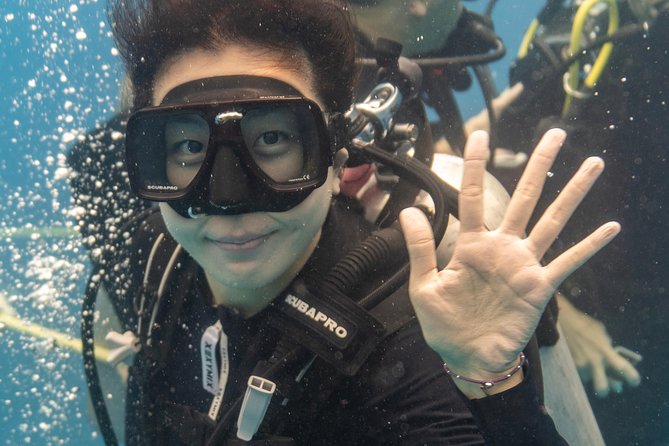
Arrive ready to complete paperwork, review the health questions, and receive your equipment. Shoe size and T-shirt size are requested during booking, which helps the center prepare gear ahead of time.
The medical form deserves more attention than it often receives on vacation. If you answer yes to certain questions, including some conditions involving asthma or the heart, you may need written consent from a doctor before check-in. Do not wait until the morning of the outing. If you cannot produce the required medical statement after the cancellation window, you can lose the full payment.
You also need to remain sober. Alcohol and anything that makes you sleepy or less alert are prohibited before the activity. The crew can deny participation when safety is a concern, and there is no refund when that happens within 24 hours of the scheduled start.
The shop briefing is an important part of the morning, not filler. You learn how to use the regulator, manage basic problems, communicate underwater, and respond if equipment shifts. One participant who had a regulator knocked loose by another person’s arm said the training made it easy to retrieve it and continue safely.
That is the kind of practical lesson you want before entering open water.
From Waikiki to the boat
The listed itinerary names Waikiki, Honolulu, Oahu, Oahu Nature Tours, the North Shore, Lanikai Beach, Diamond Head State Monument, Hanauma Bay Nature Preserve, and Ala Moana Beach Park. These are best understood as geographic references connected with Oahu and the operator’s service area, not a sightseeing circuit with stops at each beach, park, and monument.
You are booking a scuba trip, not a round-island tour. The actual activity begins at the Waikiki meeting point and continues to the docks and ocean site. There is no indication that you will stop at Diamond Head, explore Hanauma Bay, visit Lanikai, or tour the North Shore during these four hours.
That distinction matters when planning your day. If you want photographs at Diamond Head or a swim at Hanauma Bay, schedule those separately. This morning is centered on equipment, boat time, instruction, and underwater sessions.
A short boat ride gets you offshore. That keeps the morning efficient, but it also means the experience is shaped by the Pacific. Wind, rain, swell, and visibility can change what you see. One outing during rainy weather had visibility of only 10 to 15 feet, while another had excellent encounters with turtles, an eagle ray, a shark, and two eels.
The center may cancel for unsafe conditions, but weather decisions can occur close to departure. Keep some flexibility in your Oahu schedule, especially during unsettled weather.
Learning the basics before entering open water
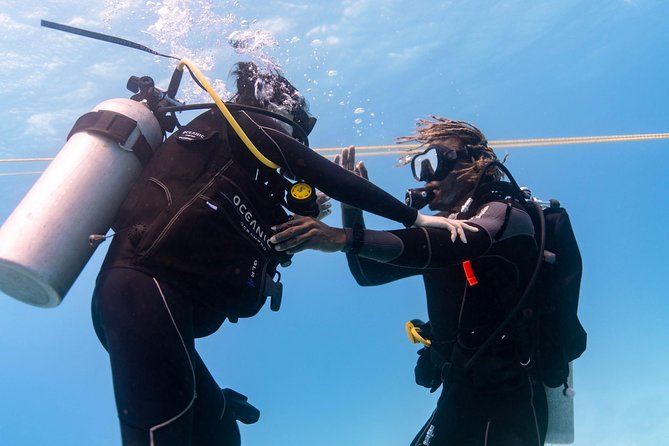
New scuba participants are placed with an instructor and taught the core skills before the first descent. The stated group size is no more than 16 people overall, but the underwater groups are kept smaller, with accounts describing about three certified participants to one instructor and separate instruction for four students.
That ratio can be a major safety advantage. A guide who is watching a small group has a better chance of noticing trouble with breathing, buoyancy, or equalizing. It also gives you more opportunity to signal when you need help.
Still, do not stay silent if the briefing leaves you confused. Hand signals can seem obvious to an experienced person and unclear to a beginner. Ask the instructor to repeat anything you do not understand before entering the water.
This is especially important because the quality of communication appears to depend on the particular crew and the day’s organization. Josh is repeatedly described as patient, funny, and clear. Chad is praised for helping a nervous first-timer settle down. Olga is noted for checking equipment and comfort often. Red is credited with giving calm instruction to both new and returning scuba participants.
There have also been complaints about rushed explanations, confusing signals, and last-minute group confusion. My advice is simple: arrive early, identify your instructor, and ask direct questions. A private instructor is available at an additional cost if you want more personal attention.
More dive trips off Oahu:
- First-Time Scuba Diving in Honolulu + Free Videos
★ 5.0 · 3,123 reviews - Beginner Scuba Diving Experience with Video Package in Honolulu
★ 5.0 · 877 reviews - Dive with Sharks in Hawaii: Shark Tour from Haleiwa
★ 5.0 · 468 reviews - Certified Diver: 2-Tank Deep Wreck and Shallow Reef Dive Off Oahu
★ 5.0 · 331 reviews
The first session: skills, nerves, and the rope descent
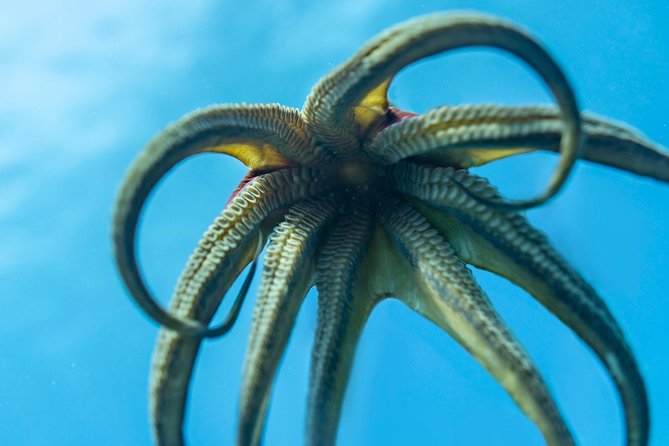
The first descent is not designed as a free swim across a huge reef. You practice the skills that let you manage the equipment and stay calm underwater.
You may descend beside a line to roughly 40 to 60 feet, complete the basic exercises, and remain near the instructor while you learn how the regulator and tank feel. That can sound less exciting than immediately searching for turtles, but it is the right order.
First-timers often need several minutes to adjust to breathing underwater. Some have trouble at the beginning and become comfortable only after patient coaching. That is why this outing is better suited to people who want an introduction to scuba than to people seeking a technically challenging underwater route.
You also need a moderate level of physical fitness. Getting dressed in equipment, moving on a boat, entering the water, and climbing back aboard all require effort. Children must be accompanied by an adult.
If you cannot complete the first session, the crew may decide that a second session is not suitable. That is frustrating if you hoped to spend the full morning underwater, but it is also a reasonable safety limit. Be honest about your comfort and medical condition before booking.
The second session: turtles, reef fish, and small surprises
After changing tanks, you return to the water for the exploration portion. The sites are described as shallow coral reef areas, not dramatic wall sites or advanced locations.
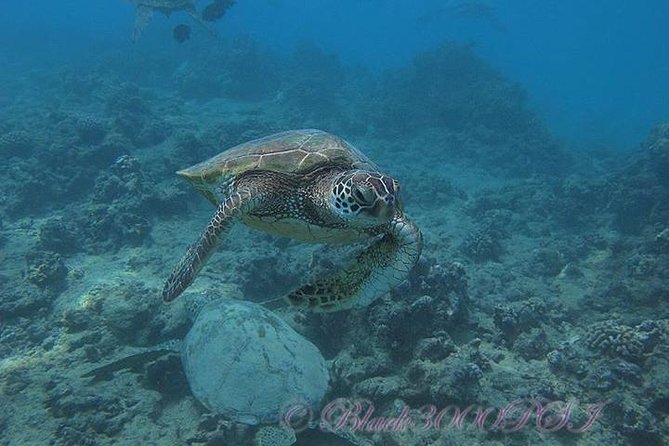
Sea turtles are the signature sight. You might watch one rest under a reef ledge, swim upward nearby, or pass through the group. Keep your hands to yourself and give turtles room. The joy comes from observing them move through their own habitat, not from chasing or touching them.
The reef life can be varied even when the coral formations are modest. You might see colorful fish, needlefish, sea urchins, starfish, eels, and small octopus. Rays and reef sharks are possible, and dolphins have occasionally been seen in the wider area, though none of these encounters is guaranteed.
One account describes an eagle ray feeding, a shark, two eels, and a turtle on the same outing. Another recalls a tiny octopus, a small shark, turtles, and many fish. Those are memorable possibilities, not promises. Visibility and animal activity change with conditions, the site, and the season.
The reef may feel understated if you have already snorkeled at famous Hawaiian sites. One participant found the coral limited, with much of the marine life gathered around a large pipe. Another found the reef and fish magnificent. Both impressions can be true on different days.
If your main goal is simply to experience breathing underwater and see a turtle, this should satisfy you more often than not. If your priority is a large, pristine coral garden, keep your expectations measured.
What the crew adds to the morning
A good instructor makes or breaks a first scuba outing. The strongest pattern here is calm, hands-on support.
Josh is a particularly safe choice to request if the center can honor such a preference. He is described as patient with beginners, clear during the briefing, attentive underwater, and good at locating marine life. Chad has helped people who struggled badly at first, using steady coaching rather than pressure. Olga is praised for monitoring equipment and comfort throughout the session.
Captain Steve and Captain Yoshi also receive warm attention for keeping the boat organized and helping non-scuba participants. If someone in your party decides not to enter the water, the captain may help with snorkeling or keep that person comfortable aboard.
That makes the outing workable for mixed groups, although the non-scuba participant is not receiving a separate sightseeing tour. Snacks and water are included. Lunch is not, so plan to eat before or after the four-hour schedule.
The crew’s experience does not remove every risk of confusion. One account describes a chaotic feeling when the group assignments were clarified just before entering the water. The operator explained that certified participants and students were assigned separate instructors, but the lesson for you is still useful: confirm your group and instructor early.
Is $299 a fair price?
At $299 per person, this is not a casual add-on. You are paying for a boat trip, two tanks, equipment rental, instruction, safety supervision, water, snacks, and a small-group format.
For someone who wants to test scuba before committing to a certification course, the price can make sense. You get enough time underwater to learn whether you like the sensation, the equipment, and the open-ocean setting. Several people who began as first-timers decided they wanted formal certification afterward.
The value is weaker if you only want a quick look at turtles. Snorkeling costs less and may give you more freedom to swim at the surface. The scuba equipment and instruction are what justify the higher price.
Certified scuba participants should think carefully. The sites are tame and shallow, and the pace is built around beginners. A certified person returning after 10 or 15 years away may appreciate the refresher. An active, experienced scuba participant may find the route too basic.
The maximum of 16 people is reassuring, but the total boat capacity is not the same as your underwater group size. Ask how groups will be assigned if you have specific needs.
Timing, cancellations, and flight planning
You can cancel for a full refund if you do so at least 24 hours before the scheduled start. Changes made inside that window are not accepted, and a late arrival of more than 15 minutes can result in cancellation without a refund.
For groups of five or more, the cancellation rule is stricter, with free cancellation only up to 21 calendar days before departure. That matters for families, reunions, and private groups.
Poor weather or failure to meet the minimum number of participants can lead to cancellation. You should be offered another date or a full refund in those cases, but allow time for the payment processor to complete the refund.
Most important, keep scuba away from your flight schedule. For the shallow two-tank outing at 40 to 60 feet, the instructions say not to fly within 18 hours. If you are doing a deeper session in the 60 to 100-foot range, allow 24 hours. Do not put this activity on the morning before an evening flight unless the timing clearly meets the stated interval.
Because the trip is often reserved about two weeks ahead, book early if your Oahu dates are fixed. Then keep the day before and after reasonably flexible if possible.
Who should book this Oahu scuba tour?
I would recommend it to:
- A first-timer who wants real ocean scuba rather than a pool demonstration
- A returning scuba participant who has been away from the sport for years
- Families with older children who meet the operator’s requirements
- Couples or friends who want a shared underwater activity
- A certified participant who is comfortable with beginner-friendly, shallow sites
- Anyone whose top wildlife goal is seeing Hawaiian green sea turtles from underwater
I would be more cautious if you want advanced sites, guaranteed shark or ray sightings, a large coral garden, or a relaxed schedule with no possibility of weather changes.
You also need to be comfortable with strict medical, sobriety, arrival, and flight rules. Those are not minor details. They can determine if you are allowed to participate and if you receive your money back.
Should you book it?
Book this outing if you want a structured first taste of open-ocean scuba and value patient instruction, full gear, and close supervision. Request Josh, Chad, Olga, or Red if available, arrive early, and ask questions until the hand signals and equipment feel clear.
Skip it if you mainly want surface snorkeling or if your schedule cannot absorb an 18-hour no-fly window. At $299, the strongest value comes from the learning and the chance to see turtles underwater, not from a guaranteed spectacular reef. Plan around the weather, keep your expectations realistic, and this can be one of the more memorable ways to spend a Waikiki morning.
FAQ
Where does the scuba tour meet?
The meeting point is Waikiki Dive Center at 424 Nāhua Street, Honolulu, Hawaii 96815. The activity returns to the same meeting point.
How long does the activity last?
The tour lasts approximately four hours. That includes preparation, instruction, boat travel, and two ocean scuba sessions.
Do I need scuba certification?
No. Beginners and non-certified participants can join after completing the required instruction and medical questionnaire. Certified participants can also take part.
What marine life might I see?
Sea turtles, tropical fish, eels, octopus, rays, reef sharks, urchins, and starfish are possible. Dolphins may sometimes appear, but wildlife sightings are not guaranteed.
What is included in the $299 price?
Full equipment rental, water, and snacks are included. Lunch is not included.
Can I fly soon after the tour?
You should not take a flight within 18 hours after the shallow two-tank session at approximately 40 to 60 feet. A deeper 60 to 100-foot session requires a 24-hour interval.
What happens if I need to cancel?
You can receive a full refund if you cancel at least 24 hours before the scheduled start. Cancellations, changes, or rescheduling requests made within 24 hours are not refunded or accepted. Poor weather or an unmet minimum may result in a different date or a full refund.
Just added around Oahu
- Kevo’s Beach Bus★ 5.0 · 3 reviews
- 2hr Luxury Private Sailing Catamaran for 7-12 People★ 5.0 · 3 reviews
- Mokulua Islands Self-Guided Kayak Adventure★ 3.5 · 3 reviews
- Night Ninja Adventure Course in Kapolei★ 3.5 · 3 reviews
- Surf Lessons get your Social Media video & photos you Surfing HI.★ 5.0 · 3 reviews
- Arrival Lei Greeting –HNL to Waikiki Private Transfer★ 5.0 · 3 reviews
- Private “Limousine” USS Arizona Memorial & Cultural Honolulu Tour★ 5.0 · 3 reviews
- (2nd)Diamond Head Hike w/ Malasada Starts at 7:00 a.m.★ 3.3 · 3 reviews
Sea Turtle Tours, compared.
Oahu’s Ultimate Tour: Dole, Turtle Snorkel, Pali Lookout & More
Read our review →
Oahu Circle Island Tour with Turtle Snorkeling— Small-Groups
Read our review →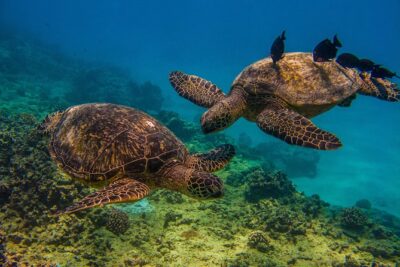
Waikiki, Hawaii: Turtle Canyon Snorkel Excursion
Read our review →
Turtle Canyon Snorkel Adventure in Waikiki, Oahu
Read our review →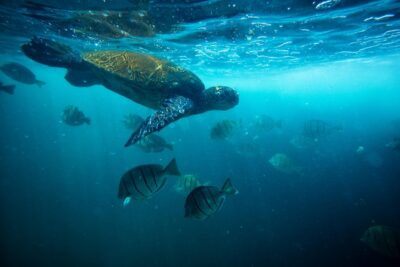
Waikiki Catamaran Snorkel Sail with Lunch: Turtles Guaranteed
Read our review →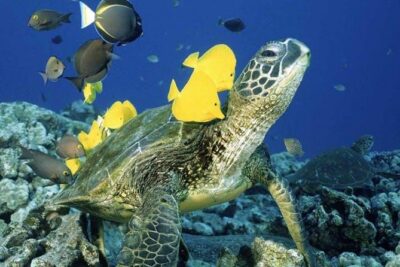
Waikiki Turtle Snorkel and Sail on Hawea Catamaran
Read our review →
Oahu Catamaran Snorkel Tour: See Turtles 100% Guaranteed
Read our review →
Browse the lists this tour appears in