
Reviewed · SNORKELING
Marine Ecology Snorkel from Electric Beach Oahu with Photos
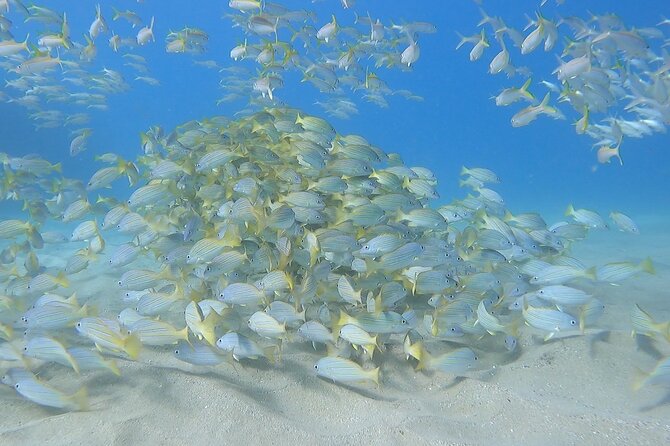
The best part of this Electric Beach snorkel is that you are not simply pointed toward the water and left to spot fish. A marine biologist guide turns the hour in the sea into a moving lesson on coral reefs, endemic species, and sea turtle ecology. You may see reef fish, turtles, monk seals, or eagle rays, but the real prize is understanding how the pieces fit together.
I like the maximum group size of five, which gives you room to ask questions and lets the guide keep a close eye on the group. I also like the complimentary photo package. It means you can focus on the reef instead of trying to manage a camera while swimming.
The main consideration is the ocean itself. This is a moderately physical activity, and one review notes that a few people felt motion sick before settling in. If you are not a strong swimmer or feel uneasy in open water, tell the guides early so they can help you stay comfortable.
In This Review
- Key points to know before booking
- Why this Electric Beach snorkel feels different
- Starting at Kahe Point Beach Park
- One hour of guided snorkeling
- What Talia and Randy add to the experience
- Wildlife, coral, and the value of interpretation
- Is $125 a fair price?
- Who should book this outing?
- Timing, weather, and what to plan for
- How this compares with a standard snorkeling trip
- Should you book the Electric Beach Marine Ecology Snorkel?
- FAQ
- Where does the snorkel begin?
- Where does the activity end?
- How long does the experience last?
- How many people can join the tour?
- Is snorkel equipment included?
- Are photos included?
- What marine life might I see?
- What will the guide teach?
- What fitness level is required?
- What happens if weather cancels the activity?
Key points to know before booking
- A real in-water classroom: Learn about reef ecology, Hawaiian species, geology, and the role each animal plays in its habitat.
- Small group of no more than five: You get a more personal outing than on a large boat or beach tour.
- About one hour in the water: The full experience lasts around two hours, including the briefing and snorkel.
- Kahe Point Beach Park setting: Electric Beach is known for its marine life, with several underwater habitats to explore.
- Photos and equipment included: Snorkel gear is provided, along with a complimentary photo package.
- Wildlife sightings are never promised: You might see fish, sea turtles, monk seals, or eagle rays, but each outing changes with conditions.
Why this Electric Beach snorkel feels different
Many snorkeling trips focus on getting you into the water quickly. This one gives the guide time to explain what you are seeing and why it matters. Before you swim out, you take part in a short briefing about the site and Hawaii’s reefs. You can ask questions and tell the guide what interests you most.
That small exchange matters. If you care about turtles, the guide can frame the outing around turtle ecology. If you want to understand coral, fish behavior, or the geology of the coast, you have a chance to say so before the fins go on.
Once you are in the water, the lesson continues in real time. Instead of seeing a fish as just a flash of color, you learn how it relates to the reef. You may look at different habitats and discuss how coral, plants, fish, and larger animals share the same space.
I find this approach especially useful for families and first-time snorkelers. Children often remember a story about an animal longer than they remember a list of species. A guide who can explain the reef as a living system gives the outing more meaning than a quick swim past a few fish.
More snorkelling spots around Oahu:
- Oahu: Grand Tour Around Island 16 Locations plus Snorkeling
★ 5.0 · 8,669 reviews - Oahu’s Ultimate Tour: Dole, Turtle Snorkel, Pali Lookout & More
★ 4.5 · 5,461 reviews - Oahu Circle Island Tour with Turtle Snorkeling— Small-Groups
★ 5.0 · 5,214 reviews
Starting at Kahe Point Beach Park
The experience begins at Kahe Point Beach Park, at 92-301 Farrington Highway in Kapolei. You return to this same meeting point at the end, so there is no separate drop-off location to sort out.
The park is also known as Electric Beach. The name comes from the nearby power plant, which helps explain why this spot attracts marine life. The warm-water setting can support a busy reef area, though the exact conditions and animal activity can change from day to day.
You should expect a beach-based snorkel rather than a boat trip. That keeps the outing simple and avoids time spent traveling offshore, but it also means your comfort depends more directly on the beach and ocean conditions that day.
After arrival, the briefing covers basic reef information and the snorkel site. This is your chance to ask about the water, explain your experience level, and mention any concerns. If you are nervous, say so. One guide, Randy, was singled out for helping less confident swimmers feel safe and comfortable.
One hour of guided snorkeling
The water portion lasts about one hour. That is long enough to explore more than one habitat without turning the outing into an exhausting half-day commitment.
Your guide points out marine life as you go, explaining what you are seeing while it is still in front of you. You may encounter reef fish, sea turtles, monk seals, eagle rays, and other animals. These are wild sightings, not scheduled performances, so you should treat the list as a possibility rather than a promise.
The guides also explain how species fit into the larger reef system. That can include the relationship between coral, fish, plants, and animals that use the reef for food or shelter. You come away with a clearer sense of why a coral reef behaves like a busy city, with different residents using different spaces and resources.
The outing is described as unique each time. That is worth taking seriously. You may see a turtle on one visit and a monk seal on another, or spend more time examining fish and coral when larger animals are absent. The changing conditions are part of the appeal, but they also mean this is not the right choice if you need a fixed wildlife checklist.
What Talia and Randy add to the experience
Talia is a marine biologist, and her role gives the tour a strong science focus. She has been praised for explaining geology, geography, plant life, and animal life in a clear and enthusiastic way. She also brings attention to Hawaiian names and uses for species, which adds a respectful cultural layer to the natural history lesson.
Randy’s contribution is practical. He pays attention to swimmers who need extra support, helping the group stay comfortable and secure in the water. That combination works well: one guide can focus on the story of the reef while the other keeps an eye on how people are managing physically.
You should not assume both guides will lead every departure, but their strengths show what the experience aims to provide. The emphasis is not only on finding animals. It is also on safe guidance, thoughtful interpretation, and respect for the place you are visiting.
That balance is important at a site with open-water conditions. Even an enthusiastic swimmer can become tired or disoriented. A small group makes it easier for the guides to notice when someone needs a pause or a bit more help.
More photo shoots and sessions:
- From Waikiki: Best of Oahu Photo Tour with Pickup
★ 4.9 · 274 reviews - Beautiful Colors of Hawaii Photo Tour
★ 5.0 · 165 reviews - Private 1-on-1 Surf Lesson with Videos and Photos
★ 5.0 · 107 reviews - Flying Dress Photoshoot on Oahu
★ 5.0 · 92 reviews
Wildlife, coral, and the value of interpretation
The animals are the obvious draw, but the explanations are what make the outing worth more than a basic equipment rental. A turtle is exciting to see on its own. Learning about its relationship with the reef gives the sighting a wider context.
You may also see endemic species, which are animals found only in Hawaii. The guide can explain why island ecosystems produce such distinct wildlife and why reef health affects many species at once.
Monk seals and eagle rays are possible highlights, but they are not guaranteed. If one appears, the encounter may be brief. A good guide helps you notice the animal without chasing it or disrupting its behavior. The same principle applies to turtles and fish.
The respectful approach extends beyond wildlife. The cultural references to Hawaiian names and uses help connect the reef to the people and traditions of the islands. You are not simply looking at an underwater attraction. You are learning about a place with ecological and cultural importance.
Is $125 a fair price?
At $125 per person, this is not the cheapest way to get a mask and snorkel in the water. The price makes more sense when you consider what is included: equipment, a small group capped at five people, a marine biologist-led lesson, roughly two hours of instruction and snorkeling, and complimentary photos.
You are paying for attention as much as for gear. On a large excursion, the guide may need to keep a broad group moving. Here, you can ask questions and express your interests before entering the water. That matters if you want to understand the reef rather than simply spend time near it.
The photos add practical value, too. You do not have to choose between watching the wildlife and handling a camera. Since the photo package is included, the experience is easier to enjoy in the moment.
I would consider the price reasonable for visitors who care about marine life, families who want a guided learning experience, and anyone who prefers a quiet, personal outing. It is less compelling if your only goal is a short, low-cost swim and you do not care about interpretation.
Who should book this outing?
This snorkel suits people with a moderate level of physical fitness. You need to be comfortable taking part in an ocean activity, and you should be ready for about an hour in the water.
It can work well for families. One family described children who were nervous at first but soon had a great time. The small group and attentive guidance can make a difference for young swimmers, though every child’s comfort level is different.
It also suits curious adults who want more than a wildlife count. If you like asking why a species lives in a certain habitat, how reefs function, or how Hawaiian ecosystems developed, you will get more from this outing than from a basic snorkel rental.
You should think twice if you strongly dislike open water, have very limited swimming ability, or want guaranteed sightings. The guides can offer support, but no marine encounter or ocean condition can be controlled.
The activity is offered in English. It is near public transportation, which may help if you are not arranging a private car, though no specific transport route is provided.
Timing, weather, and what to plan for
The full activity takes about two hours, with approximately one hour spent snorkeling. Build in enough time for the briefing, equipment use, and return to the meeting point.
Wear or bring what you normally need for a beach and ocean outing, but keep in mind that the provided equipment is included. The key preparation is mental rather than technical: expect a natural setting, changing conditions, and a lesson that unfolds as the guide finds marine life.
Motion sickness is worth considering even on a beach-based outing. One person felt sick at first but adjusted quickly. If you are prone to motion sickness, plan ahead and tell the guides when you arrive.
Weather can cancel the activity. If that happens, you are offered another date or a full refund. You can also cancel for a full refund if you do so at least 24 hours before the start time. Changes or cancellations inside that 24-hour window are not accepted for a refund.
How this compares with a standard snorkeling trip
A standard trip may give you more time in the water, a larger number of departure spots, or a lower price. This one is built around personal attention and interpretation instead.
The limit of five people is the clearest difference. You are less likely to feel lost in a crowd, and you can communicate directly with the guide. That is useful if you have questions, need reassurance, or want to focus on a particular subject.
The tradeoff is that the experience remains tied to one beach location and one short snorkel session. There is no promise of a boat ride, multiple offshore sites, or a fixed sequence of wildlife encounters.
For me, the choice comes down to priorities. If you want a marine biology lesson with your snorkeling, this format has real value. If you only want to swim and take in the scenery, you may not need the added instruction.
Should you book the Electric Beach Marine Ecology Snorkel?
Book it if you want a small, thoughtful outing led by people who can explain the reef while you are looking at it. Talia’s marine biology background, Randy’s care with less confident swimmers, the maximum group size of five, and the included photos make this a strong pick for families and curious nature lovers.
Skip it if you need guaranteed turtles, monk seals, or rays, or if open-water exercise sounds stressful. For everyone else, $125 buys more than snorkel equipment. It buys an hour of guided observation and a better understanding of why Hawaii’s reefs matter.
FAQ
Where does the snorkel begin?
It begins at Kahe Point Beach Park, at 92-301 Farrington Highway, Kapolei, Hawaii 96707.
Where does the activity end?
The activity ends back at the meeting point at Kahe Point Beach Park.
How long does the experience last?
The experience lasts approximately two hours. About one hour is spent snorkeling.
How many people can join the tour?
The activity has a maximum of five travelers.
Is snorkel equipment included?
Yes. Use of snorkeling equipment is included in the price.
Are photos included?
Yes. You receive a complimentary photo package.
What marine life might I see?
You might see reef fish, sea turtles, monk seals, eagle rays, and other marine life. Sightings vary, and no specific animal is guaranteed.
What will the guide teach?
The guide covers coral reef ecology, endemic species, sea turtle ecology, Hawaii’s reefs, and the relationships among the plants and animals you see. The outing may also include information about geology, geography, and Hawaiian names and uses for species.
What fitness level is required?
A moderate physical fitness level is recommended.
What happens if weather cancels the activity?
If poor weather causes cancellation, you will be offered a different date or a full refund. You can cancel at least 24 hours before the start time for a full refund, but cancellations or changes made less than 24 hours before the start time are not accepted.
Just added around Oahu
- Kevo’s Beach Bus★ 5.0 · 3 reviews
- 2hr Luxury Private Sailing Catamaran for 7-12 People★ 5.0 · 3 reviews
- Mokulua Islands Self-Guided Kayak Adventure★ 3.5 · 3 reviews
- Night Ninja Adventure Course in Kapolei★ 3.5 · 3 reviews
- Surf Lessons get your Social Media video & photos you Surfing HI.★ 5.0 · 3 reviews
- Arrival Lei Greeting –HNL to Waikiki Private Transfer★ 5.0 · 3 reviews
- Private “Limousine” USS Arizona Memorial & Cultural Honolulu Tour★ 5.0 · 3 reviews
- (2nd)Diamond Head Hike w/ Malasada Starts at 7:00 a.m.★ 3.3 · 3 reviews
Snorkeling, compared.

Grand Tour Around Island 16 Locations plus Snorkeling
Read our review →
Oahu’s Ultimate Tour: Dole, Turtle Snorkel, Pali Lookout & More
Read our review →
Oahu Circle Island Tour with Turtle Snorkeling— Small-Groups
Read our review →
Waikiki, Hawaii: Turtle Canyon Snorkel Excursion
Read our review →
Turtle Canyon Snorkel Adventure in Waikiki, Oahu
Read our review →
Waikiki Catamaran Snorkel Sail with Lunch: Turtles Guaranteed
Read our review →
Oahu Dolphin and Snorkel Tour with Waikiki Pickup & Lunch
Read our review →
Waikiki Turtle Snorkel and Sail on Hawea Catamaran
Read our review →Browse the lists this tour appears in