
Reviewed · CLIMBING & ROPES COURSES
Oahu: High Ropes Adventure, Climbing, & Rappel Experience
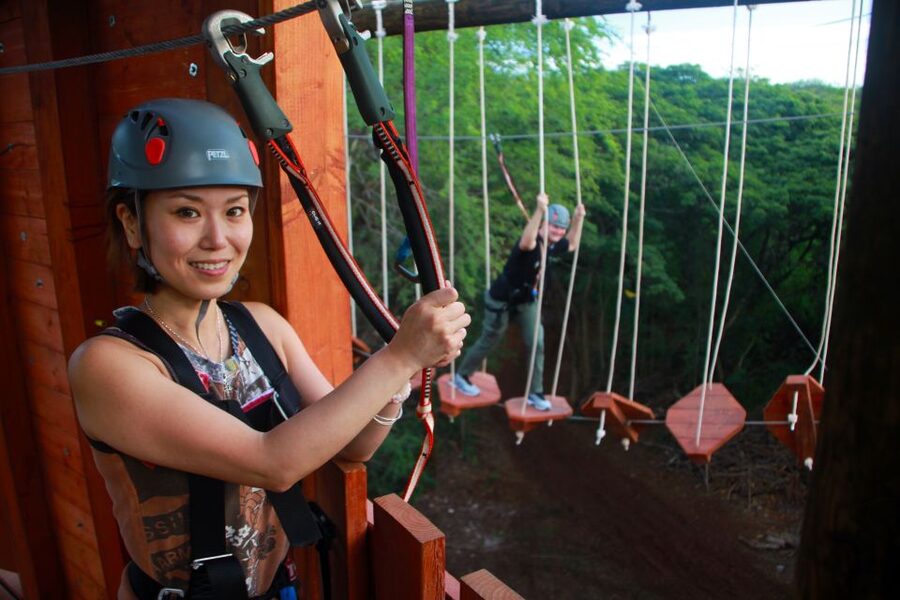
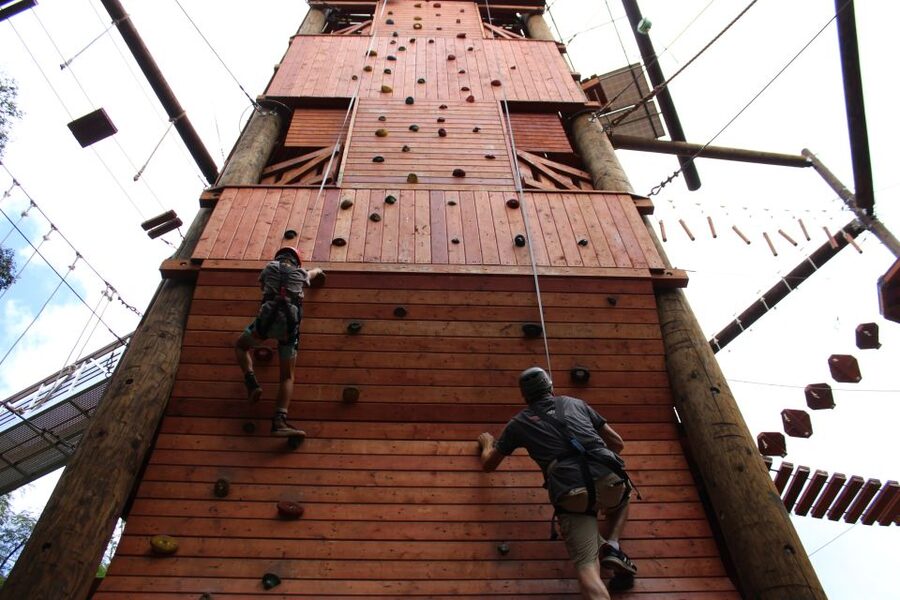
The 60-foot Adventure Tower is the main event here, with 18 high ropes challenges that ask you to climb, rappel, balance, and jump. The grand finish is a 50-foot freefall, a sharp drop that gives this short activity plenty of punch.
I like the mix of skills: you get a climbing wall with different ability levels, then move into a real obstacle course rather than spending the whole session on one ride. I also like the practical coaching, since instructors help with the ropes and offer pointers as you find your way. The main drawback is the physical demand. If holding your body weight is hard, this can feel less like a casual outing and more like a workout.
In This Review
- Key Points Before You Book
- Why Coral Crater’s Tower Makes This More Than a Climbing Wall
- Your 90 Minutes on the High Ropes Course
- How Hard Is It Really?
- The Climbing Wall Is Worth Taking Seriously
- Getting There From Waikiki
- Is $104 a Fair Price?
- Weather, Clothing, and Small Practical Choices
- Who Will Get the Most From This Experience?
- Should You Book the Coral Crater Adventure?
- FAQ
- How long does the Coral Crater high ropes experience last?
- How high is the Adventure Tower?
- How many obstacles are on the high ropes course?
- How high is the freefall jump?
- What are the weight and height requirements?
- Can children take part?
- What should I wear and bring?
Key Points Before You Book
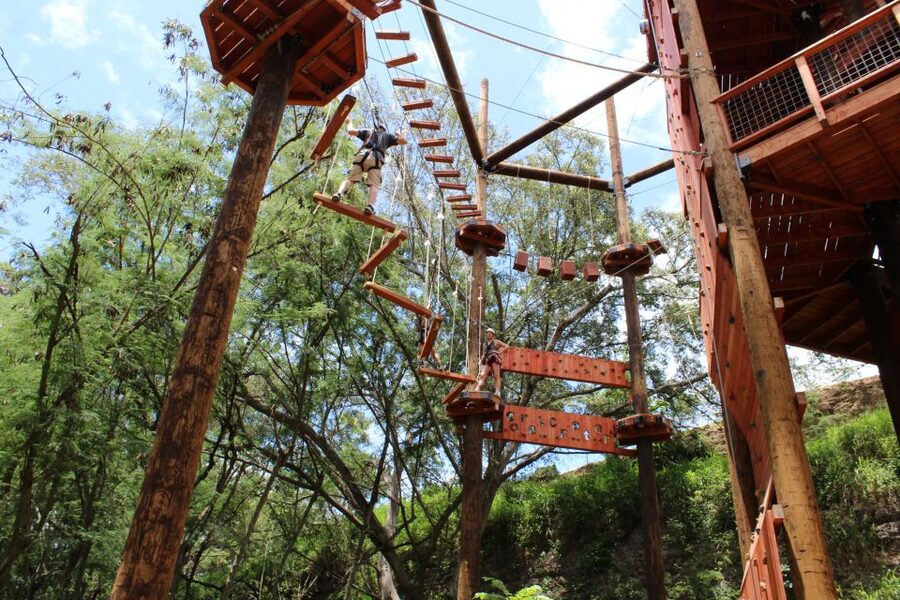
- A 50-foot freefall caps the course: You jump from the Adventure Tower after working through the ropes elements.
- The tower reaches 60 feet: Expect height, exposure, and a clear need to follow safety instructions.
- Eighteen obstacles keep the session varied: You climb, rappel, jump, and navigate the course rather than repeating one task.
- The climbing wall has several ability levels: You can work on technique and strength at a pace suited to your skill.
- The activity lasts 90 minutes: It fits neatly into a day of Oahu sightseeing, but the drive from Waikiki can take much longer than the advertised 40 minutes in afternoon traffic.
Why Coral Crater’s Tower Makes This More Than a Climbing Wall
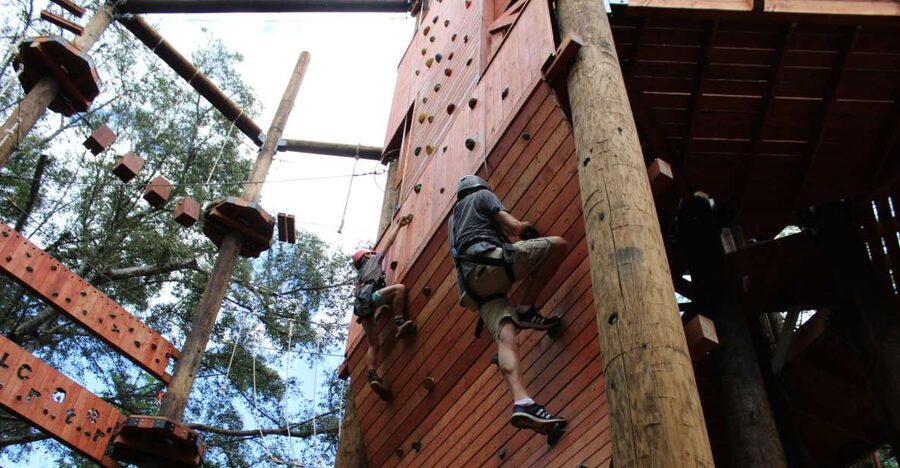
Coral Crater Adventure Park gives you several kinds of challenge in one compact visit. The climbing wall tests grip and footwork. The high ropes course tests balance and decision-making. The freefall tests your nerve.
That variety matters. You are not simply waiting in line for a single jump or taking one quick climb. The course asks you to keep moving through 18 challenge elements, so your attention stays active from start to finish. Some parts focus on strength, others on balance, and others on the moment when you have to step off a platform and trust the safety system.
The tower itself rises 60 feet, which gives the activity a real sense of height. You do not need technical climbing experience to take part, but you do need to listen closely and manage your body. The instructor provides safety gear and gives you guidance on how to use the ropes, which helps you get started without turning the session into a free-for-all.
This is best understood as a supervised physical challenge, not a gentle sightseeing stop. The park is in Kapolei, away from the main Waikiki hotel area, and the course is built for people who want to work hard and feel a genuine rush.
More climbing and ropes courses:
- Adventure Course Extreme Including Climbing Wall & Rappel
★ 5.0 · 44 reviews - High Ropes Adventure Course at Coral Crater
★ 5.0 · 42 reviews - Chasing Waterfalls:Wild Hawaii Rappelling
★ 5.0 · 19 reviews
Your 90 Minutes on the High Ropes Course
The exact starting time depends on availability, but the experience lasts 90 minutes. After check-in, you receive safety gear and instructions from an English-speaking instructor. Pay attention at this stage. The ropes are not decorative equipment, and knowing how to handle them is what lets you focus on the obstacles instead of worrying about every attachment point.
You then get access to the Adventure Extreme area, including the challenge course and climbing wall. The information provided does not promise a fixed order for every element, so your session may move between the wall and tower-based challenges according to the park’s operating flow.
The climbing wall is a useful first test. Its different ability levels give you a chance to see how your grip, reach, and confidence feel before taking on the taller course. If you are new to climbing, use the instructor’s pointers rather than trying to race immediately. If you already climb, the wall offers a chance to show speed and control.
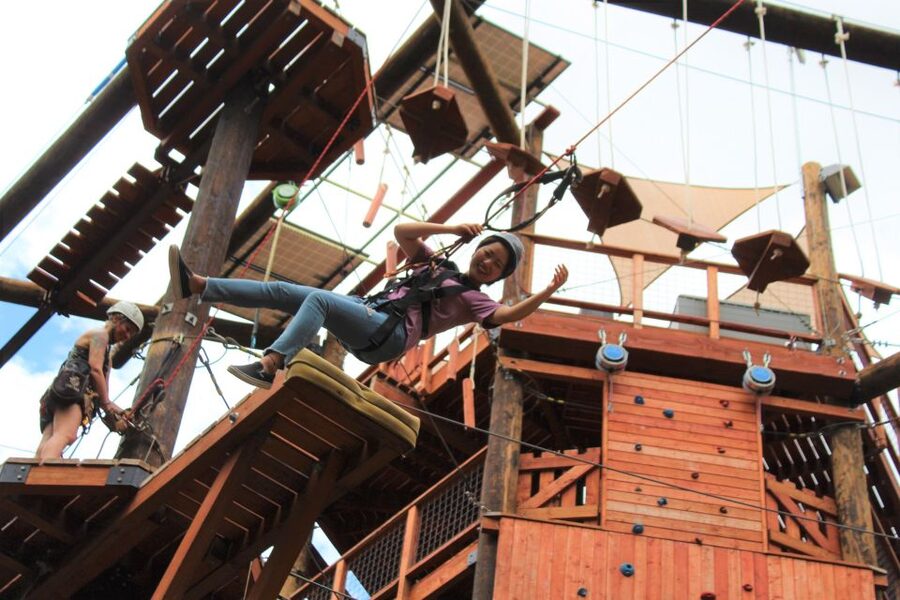
From there, the high ropes section brings more variety. You may climb along an obstacle, rappel down, or jump between challenge points. The course has 18 elements, so the experience is not built around one dramatic moment alone. The smaller decisions matter: where to place your feet, how to shift your weight, and when to commit to the next move.
The 50-foot freefall is the clearest adrenaline hit. You step off the tower and drop under the park’s safety system. It is a voluntary-feeling moment in the sense that your nerve has to catch up with your instructions, but the activity description presents it as part of the main experience. If height makes you uneasy, know that this is not an optional detail you can casually ignore when choosing the activity. The tower and freefall are central to the appeal.
The course can also provide a solid workout. One recent participant described it as challenging and physically demanding, with plenty of effort required to support your own body weight. That is useful information for planning. You do not need to be a trained athlete, but basic upper-body strength and comfort with exertion will make a big difference.
How Hard Is It Really?
The park sets a minimum weight of 40 pounds and a maximum of 275 pounds. Everyone is weighed at check-in before each tour. If you fall outside that range, you will not be allowed to participate, and the stated conditions do not offer a refund or rescheduling in that case. This is one rule to treat seriously rather than discovering it at the gate.
You must be at least 4 feet 6 inches tall to navigate the course independently. Children who are at least 6 years old but shorter than that height may still take part, but an adult participant must lead them through the course, or you must hire a guide to help with the safety tasks. The course is not suitable for children under 6.
The physical side deserves equal attention. You climb, rappel, jump, and hold yourself in position. If you cannot comfortably support your body weight, the course may be frustrating or unsafe for you. People with back problems, mobility impairments, heart problems, or pregnancy should not book this activity. The park also lists anyone over 275 pounds as unsuitable.
Comfortable clothes and closed-toe sports shoes are required. Open-toed shoes are not allowed. Choose footwear that stays secure while you climb and move, and avoid clothing that restricts your legs or catches on equipment. You do not need to bring food or drinks as part of the package, since they are not included.
The Climbing Wall Is Worth Taking Seriously
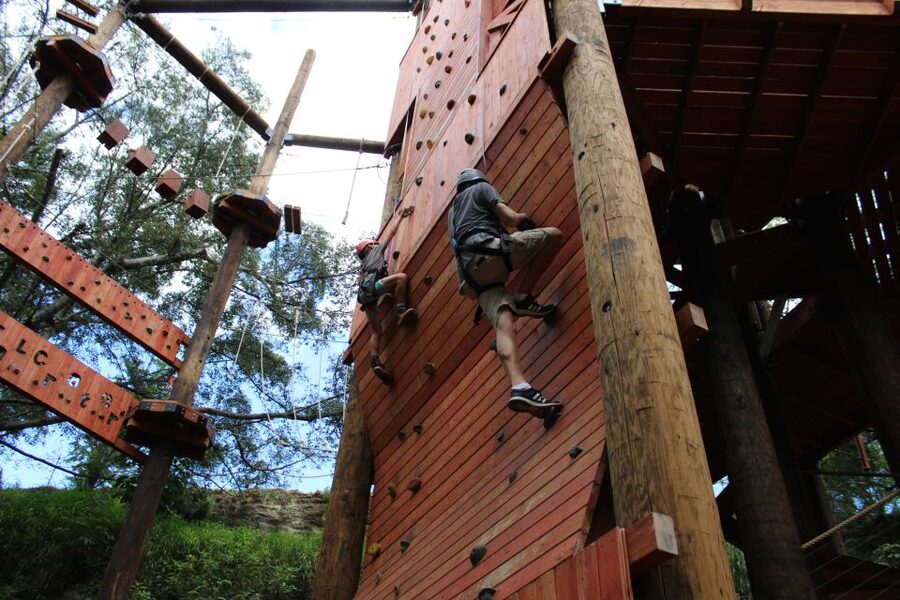
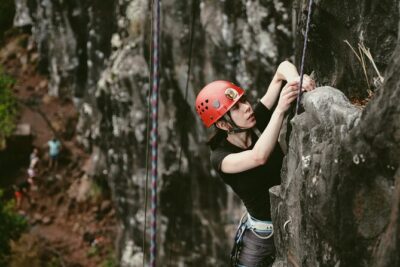
It would be easy to treat the climbing wall as a warm-up and rush toward the tower. I would not. The wall has different levels of ability, making it a practical place to learn how your body works on the equipment.
Use your legs as much as possible instead of trying to pull yourself up with your arms alone. The instructor can offer tips to help you get started, and that coaching is particularly useful if you have never climbed before. The wall also gives stronger climbers a chance to move quickly and test their technique.
This part is valuable for families and mixed-ability groups. One person can work on a more accessible section while another takes on a harder route. The information does not specify separate routes or exact grading, so do not expect a formal climbing lesson. Think of it as a supervised chance to build confidence and strength before, or alongside, the ropes course.
A different sort of day, same island:
- Oahu Grand Circle Island and Haleiwa Tour: 9-Hr Deluxe Experience
★ 5.0 · 17,387 reviews - Oahu: Grand Tour Around Island 16 Locations plus Snorkeling
★ 5.0 · 8,669 reviews - Parasailing Experience in Waikiki, HI
★ 5.0 · 7,692 reviews - Salute to Pearl Harbor Including USS Arizona
★ 4.5 · 7,433 reviews
Getting There From Waikiki
Coral Crater is about a 40-minute drive from Waikiki without traffic. That estimate can change sharply in the afternoon, when the trip may take more than an hour. Plan the drive before booking a tight connection with dinner, a show, or another timed activity.
You will take H1 West, continue via H-201 West and H-1 West toward Makakilo, and leave at Exit 2 for Makakilo, Kapolei, and Kalaeloa. After passing Kapolei High School on your left, turn left onto Roosevelt Avenue. Turn right onto Midway Street, where Coral Crater’s parking lot is on the corner.
Hotel pickup and drop-off are not included. In practical terms, a rental car or your own transportation is the simplest way to reach the park. If you are staying in Waikiki, build in extra time, especially for a weekday afternoon. Arriving late would cut into an already short 90-minute session.
The park is stroller accessible, and service animals are allowed. Those points help with general access around the property, but they do not change the physical requirements of the ropes course itself.
Is $104 a Fair Price?
At $104 per person, this is not a cheap add-on. The value depends on what you want from your Oahu day. You are paying for 90 minutes of supervised activity, safety gear, instructor support, access to the climbing wall, 18 high ropes elements, and the tower freefall.
For a thrill seeker, that package can make good sense. You get several activities in one booking, and the course requires active participation rather than a short ride followed by a long wait. The climbing, rappelling, and jumping also give the session more variety than a stand-alone zip or freefall attraction.
The value is weaker if you are mainly looking for scenery, a relaxed family outing, or a low-effort activity. You also need to account for transportation costs and time. A drive of 40 minutes each way, or longer in traffic, makes this a larger half-day commitment than the 90-minute duration suggests.
The reserve-now, pay-later option helps if you are still shaping your schedule. You can hold a place without paying immediately, and cancellation is allowed up to 24 hours ahead for a full refund. That flexibility is useful on an island trip, where weather and traffic can alter your plans.
Weather, Clothing, and Small Practical Choices
The activity runs rain or shine. That makes weather planning different from a standard outdoor attraction. Bring clothes you can move in and shoes with closed toes, but do not assume poor weather will automatically cancel the session.
Comfort matters because you will be climbing and shifting your weight for much of the visit. Sports shoes are specifically recommended. Open sandals and other open-toed footwear are not permitted, so check your shoes before leaving the hotel.
Food and drinks are not included. You may want to eat beforehand, especially if you are scheduling the course between other activities, but the provided information does not specify on-site dining or drink service. Do not count on the tour package to cover refreshments.
Bring a passport or ID card. The park also weighs every participant at check-in, so make sure your group understands the weight policy before you drive over. If someone does not meet the requirement, the stated terms do not provide a refund or new booking.
Who Will Get the Most From This Experience?
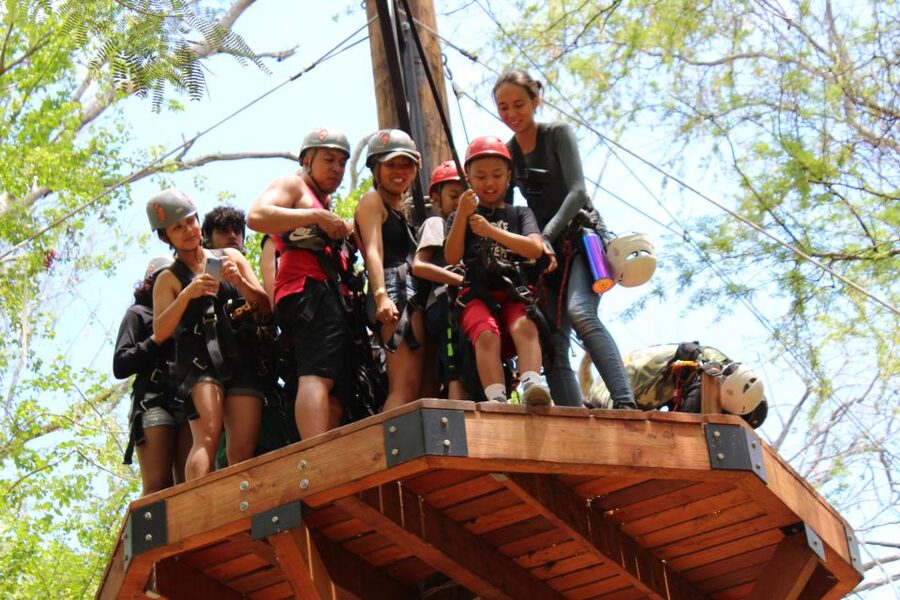
I would recommend this for active visitors who want a physical challenge and enjoy the moment before a jump. It suits friends, families with eligible children, and couples who would rather test their nerve than spend another afternoon sitting by the water.
It is also a good choice for people who like progress. You can start with the wall, learn from the instructor, and then put those skills to work on the course. The 18 elements mean you have several chances to adjust your approach instead of being judged by one climb.
I would not choose it for a relaxed day, for anyone with the listed medical restrictions, or for someone who dislikes heights. The 60-foot tower and 50-foot freefall are not background details. They define the experience.
For children under 4 feet 6 inches, the decision needs more planning. A child who is at least 6 can participate with an adult leading the course, or with a hired guide handling safety tasks. That may make the experience harder for the accompanying adult, so consider the whole group rather than booking only for the smallest participant.
Should You Book the Coral Crater Adventure?
Book it if you want a demanding, well-supervised burst of action and the idea of climbing, rappelling, and freefall sounds better than a quiet afternoon. The strongest reasons to go are the variety of 18 obstacles, the chance to use a multi-level climbing wall, and the dramatic 50-foot jump from a 60-foot tower.
Skip it if you are not comfortable supporting your body weight, cannot meet the height or weight rules, or need a simple activity close to Waikiki. The drive can stretch beyond an hour in afternoon traffic, and the course is a workout as much as it is entertainment.
For the right person, $104 buys a focused, memorable challenge rather than a passive attraction. Arrange your own transport, wear proper shoes, allow extra driving time, and arrive ready to work.
FAQ
How long does the Coral Crater high ropes experience last?
The activity lasts 90 minutes. Check availability for the current starting times.
How high is the Adventure Tower?
The Adventure Tower measures 60 feet in height.
How many obstacles are on the high ropes course?
The high ropes challenge course has 18 obstacle elements, including climbing, rappelling, and jumping challenges.
How high is the freefall jump?
The freefall involves jumping from a height of 50 feet.
What are the weight and height requirements?
Participants must weigh between 40 and 275 pounds. Everyone is weighed at check-in. Participants must be 4 feet 6 inches tall to navigate the course independently.
Can children take part?
Children must be at least 6 years old. Children shorter than 4 feet 6 inches can participate but need an adult participant to lead them through the course, or a hired guide to help with safety tasks.
What should I wear and bring?
Bring a passport or ID card, comfortable clothes, and comfortable closed-toe sports shoes. Open-toed shoes are not allowed.
Just added around Oahu
- Kevo’s Beach Bus★ 5.0 · 3 reviews
- 2hr Luxury Private Sailing Catamaran for 7-12 People★ 5.0 · 3 reviews
- Mokulua Islands Self-Guided Kayak Adventure★ 3.5 · 3 reviews
- Night Ninja Adventure Course in Kapolei★ 3.5 · 3 reviews
- Arrival Lei Greeting –HNL to Waikiki Private Transfer★ 5.0 · 3 reviews
- Private “Limousine” USS Arizona Memorial & Cultural Honolulu Tour★ 5.0 · 3 reviews
- Surf Lessons get your Social Media video & photos you Surfing HI.★ 5.0 · 3 reviews
- (2nd)Diamond Head Hike w/ Malasada Starts at 7:00 a.m.★ 3.3 · 3 reviews
Climbing & Ropes Courses, compared.
Adventure Course Extreme Including Climbing Wall & Rappel
Read our review →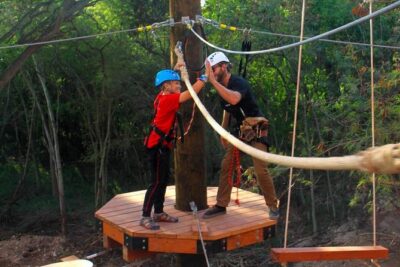
Browse the lists this tour appears in