
Reviewed · SURF LESSONS
Oahu: Waikiki 2-Hour Beginner Group Surf Lesson
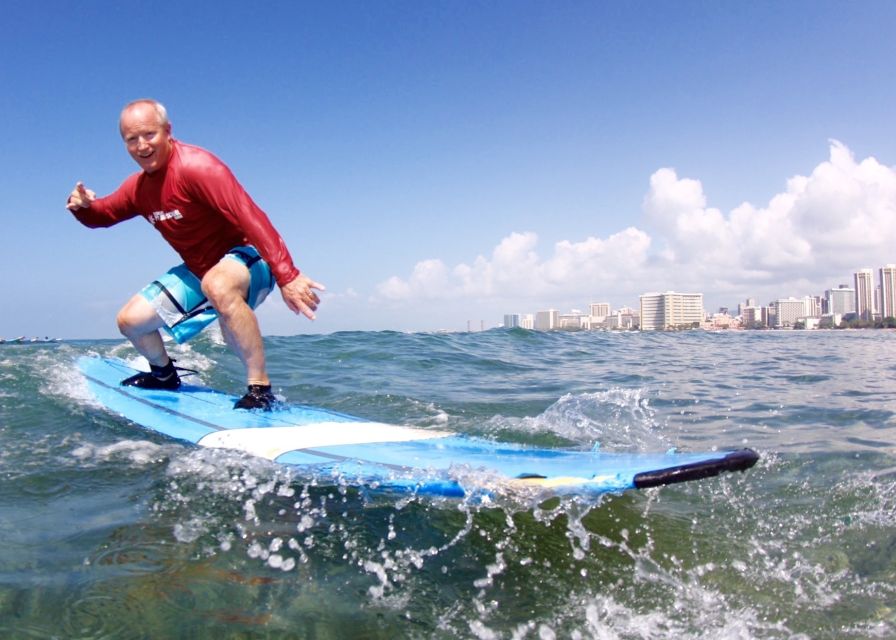
Waikiki surfing gets much better when you leave its busiest stretch behind. This two-hour lesson takes you about a mile outside the main Waikiki crowds to a calmer, beginner-friendly spot, where current professional surfers teach groups of no more than six. I like the small-group format and the fact that the lesson quickly shifts from beach instruction to real time in the water. I also like that CPR and lifeguard-certified instructors keep safety in the mix without turning the class into a lecture.
The main catch is that surfing is physical work, even when the waves are gentle. You may spend plenty of energy paddling, getting pushed into position, and trying again. Children under 11 and weak swimmers cannot join the group class and need a private lesson instead.
In This Review
- Key points at a glance
- Why this Waikiki surf lesson works for first-timers
- A beginner-friendly spot beyond Waikiki’s busiest water
- The first 20 minutes: boards, safety, and surf stance
- The water session: repeated attempts and direct coaching
- What the coaching style feels like
- Equipment, clothing, and what to bring
- Is $103 a fair price?
- Who should book this experience?
- Timing, cancellation, and small details to plan around
- The practical verdict
- FAQ
- How long is the Waikiki beginner surf lesson?
- How many people are in each group?
- What equipment is included?
- Are children allowed to join the group lesson?
- Can weak swimmers join the group class?
- Are the instructors certified?
- Can I cancel the booking?
Key points at a glance
- A quieter surf spot outside central Waikiki: You learn about a mile from the most crowded beginner areas.
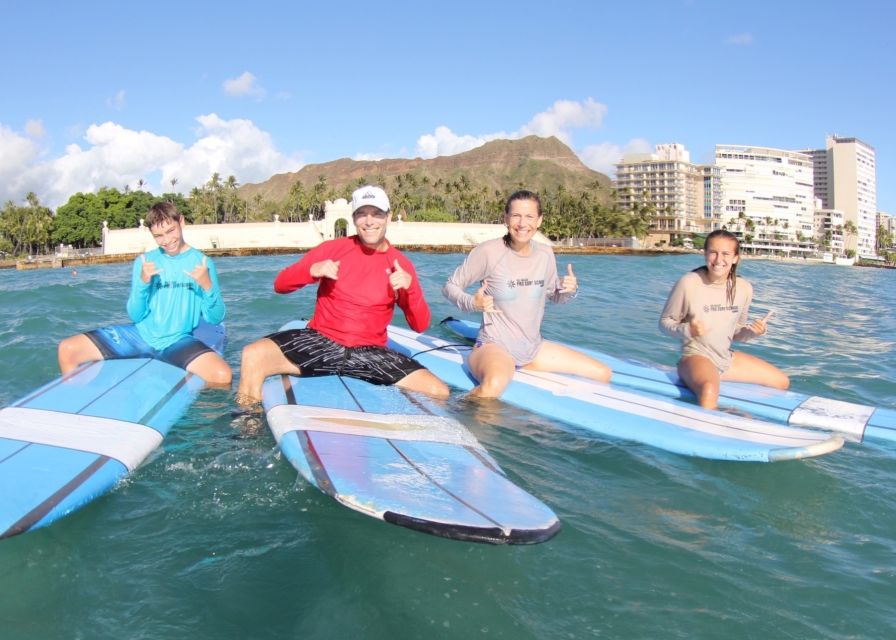
- Only six people per group: The limited size gives instructors room to offer individual coaching.
- Twenty minutes on land, then water time: You learn equipment, safety, etiquette, paddling, and stance before trying waves.
- Current professional surfers teach the class: Turner, Kai, Noah, Noa, and other instructors have been praised for patience and clear coaching.
- Most equipment is supplied: Your package includes a surfboard, leash, rashguard, and reef booties.
- Strong first-timer results: The lesson is built to help beginners stand up and catch several waves during the session.
Why this Waikiki surf lesson works for first-timers
Surfing looks simple from shore. Lie on the board, catch a wave, stand up. In practice, the timing, balance, and board control can feel like a lot at once.
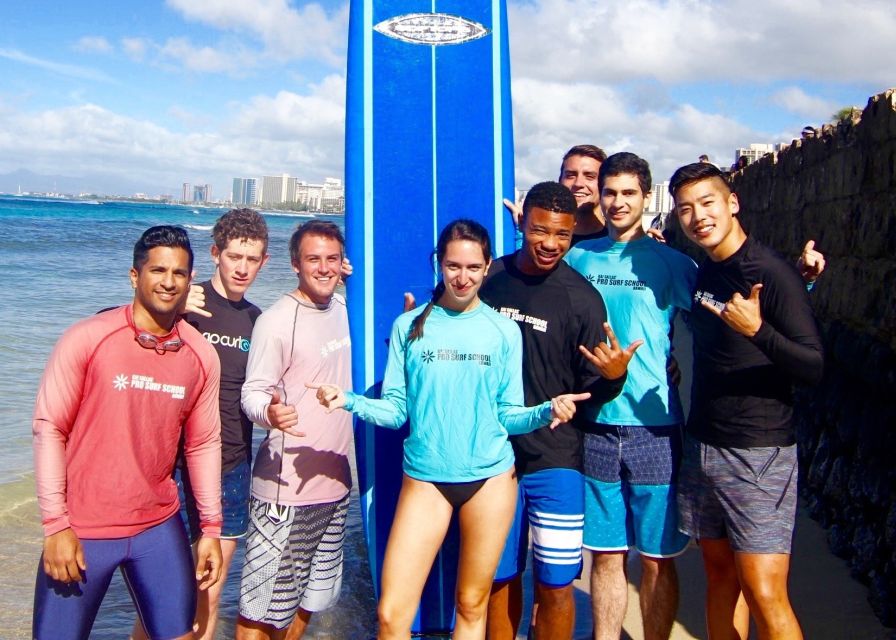
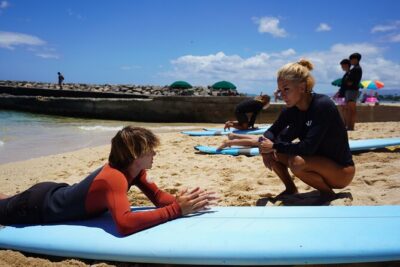
This class breaks the process into manageable pieces. You begin on land with roughly 20 minutes of instruction. That time covers the equipment, safety techniques, proper surf stance, surf etiquette, and how to move over breaking waves. Those basics matter. A beginner who knows how to handle the board and avoid another surfer has a safer and less stressful first session.
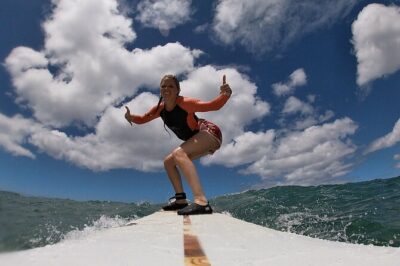
Then comes the part you came for: the water. The remaining time is spent riding waves with an instructor helping you choose when to paddle, when to stand, and how to recover after a wipeout. The lesson is not just a demonstration from the beach. You get repeated attempts, which is the only way surfing starts to make sense.
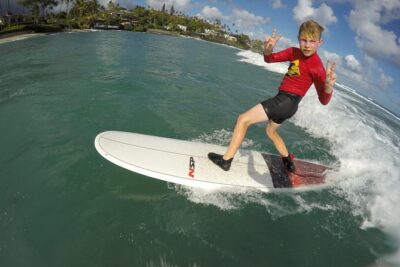
The emphasis is on getting you upright and moving. Several participants have managed to stand multiple times, sometimes early in the class, while others needed more coaching and effort. That is a fair expectation: the lesson gives you a real chance to surf, but it cannot promise that every body, wave, or balance system will cooperate on the first try.
More surf lessons on Oahu:
- Open Group Surfing Lesson in Waikiki, Hawaii
★ 4.5 · 582 reviews - Oahu: Beginner-Friendly Waikiki Beach Surfing Lesson
★ 4.9 · 425 reviews - Surfing Lessons On Waikiki Beach
★ 4.5 · 317 reviews
A beginner-friendly spot beyond Waikiki’s busiest water
The class uses a surf area about one mile outside Waikiki, described as beautiful, uncrowded, and suited to beginners. That location choice is important. Central Waikiki is famous for easy waves, but popular water can also mean more boards, more people, and more chances for a new surfer to feel in the way.
A less crowded setting gives you room to focus on your own board. You can listen for instructions, watch the wave, and try again without the same level of pressure that comes with a packed beginner line.
The exact wave conditions will always affect the lesson. Surfing is weather-dependent, and a calm day may produce small, forgiving waves while a stronger swell can make the same activity feel much harder. Your instructor will help you work with the conditions, but you should arrive ready for a workout rather than a passive beach outing.
The spot is not presented as a sightseeing stop with a long list of attractions. Its value is practical: you get a more controlled place to learn, away from the main crowd. If your priority is a quiet, scenic beach lesson with a strong chance to practice, this setup makes sense.
The first 20 minutes: boards, safety, and surf stance
The land lesson is short, but it carries a lot of weight. You learn what the board and leash do, how the equipment fits together, and how to approach the water safely.
You also get a basic introduction to surf etiquette. This is not just local custom. It helps prevent collisions and confusion. Knowing who has priority on a wave, how to carry your board, and how to get past a breaking wave makes the session safer for you and everyone around you.
The instructor demonstrates the proper stance before you try it yourself. You will work out where your feet go, how to rise from lying down, and how to keep your balance once standing. The goal is to make the movement familiar before the board is floating beneath you.
That short practice period also helps calm nerves. First-time surfers often worry about falling, looking awkward, or holding up the group. A clear beach lesson replaces some of that uncertainty with a simple sequence you can repeat in the water.
Pay close attention here. It is tempting to rush toward the waves, but a few focused minutes on land can save many failed attempts later.
The water session: repeated attempts and direct coaching
After the beach instruction, you choose equipment suited to your ability and head into the water. The surfboard, leash, rashguard, and reef booties are provided, so you do not need to assemble a kit before class.
In the water, the instructor helps you position the board and time your effort. Beginners often waste energy paddling at the wrong moment or trying to stand too early. Good coaching corrects those habits quickly.
The instructors praised most often by name include Turner, Kai, and Noah, with Noa and other coaches also leading sessions. Their teaching approach has a common thread: patience, encouragement, and individual attention. Turner has helped complete beginners catch several waves, while Kai has been singled out for calm explanations and a steady eye on nervous students. Noah has also been described as helpful with positioning and giving each person plenty of chances.
That personal guidance is especially valuable in a group. A six-person class is small enough for the instructor to keep track of everyone, but it is still a group lesson. You will not have the instructor entirely to yourself. If you need constant physical assistance, are a weak swimmer, or are under 11, the required private class is the better choice.
You should expect falls. They are part of learning, not a sign that the lesson has failed. The practical measure is progress: Are you getting into better position? Are you standing longer? Are you beginning to understand which waves are worth chasing? A successful session may include several good rides and plenty of attempts that end with you back in the water.
A few more Oahu days out worth weighing up
- Waikiki Private Group Surf Lesson
★ 5.0 · 298 reviews - Surf Lessons on the North Shore of Oahu
★ 5.0 · 267 reviews - Family, Private & Group Surfing Lessons, Waikiki Courtesy Shuttle
★ 5.0 · 216 reviews - Waikiki 2 Tank World Class Wreck SCUBA Diving – Certified Only
★ 4.5 · 205 reviews
What the coaching style feels like
The strongest feature of this experience is the human instruction. The coaches are current professional surfers, not simply staff members repeating a script. That gives the class a direct connection to the sport and to Waikiki’s surf culture.
The teaching tone appears relaxed and encouraging. Students have worked with instructors named Turner, Kai, Noah, Noa, and Tucker, and the most consistent praise goes to their patience and ability to make complete beginners feel comfortable.
That matters if you arrive nervous. A good surf instructor does more than explain technique. The coach has to keep you motivated after a fall, tell you what to change, and help you notice small improvements. One person may need help with foot placement. Another may need to paddle harder. Another may simply need reassurance before trying a wave.
The instruction is also practical rather than showy. You are not there to watch a professional perform. You are there to learn enough technique to ride the board yourself. The fact that many first-timers have stood up several times suggests the coaches focus on giving beginners manageable chances.
Still, personal results vary. Surfing ability, fitness, comfort in the ocean, and the day’s conditions all play a part. Think of standing up as a likely possibility, not a guarantee.
Equipment, clothing, and what to bring
The $103 price includes a surfboard and leash, a rashguard, and reef booties. That is useful for a first lesson because you do not need to buy or rent the basic gear separately.
Bring your own swimsuit and towel. A swimsuit is not included, and a towel is specifically listed as something to bring. Wear something you can move in and that will stay secure during repeated attempts in the water.
The reef booties are a practical inclusion. They give your feet some protection in the shallow water and make the first session more comfortable. The rashguard helps protect your upper body from board rubbing during the many minutes you may spend lying on the board.
No other personal items are listed as included, so keep your preparation simple. Bring the required towel, wear swim clothing, and arrive ready to get wet and work hard.
Is $103 a fair price?
At $103 per person, this is not the cheapest casual activity you can add to a Waikiki holiday. The value depends on what you want from your time in Hawaii.
You are paying for two hours of instruction, water coaching, a small group limited to six, safety-certified instructors, and the main pieces of equipment. For a first-time surfer, that package is more useful than simply renting a board and guessing what to do. Without instruction, you may spend your rental period fighting the board, missing waves, or putting yourself in someone else’s way.
The group size strengthens the value. Six people is still enough to create a shared activity, but it is small compared with a large beach class. If the group happens to have only four people, you may get even more direct attention.
The results reported by participants also affect the value. Many beginners have caught multiple waves or stood up during the first lesson. Even if you only get one clean ride, the instruction can give you enough understanding to decide if you want another session.
For a family with a child under 11, budget for a private lesson rather than assuming the group price applies. The group class is limited to children age 11 and older, and weak swimmers must also take a one-on-one class for safety.
Who should book this experience?
This lesson is a good match for adults, teenagers, couples, and families with older children who want a structured first try at surfing. It also suits people who are curious but nervous. The beach instruction and certified instructors give you a clear starting point, while the small group keeps the class from feeling anonymous.
It is particularly appealing if you want more than a photo holding a surfboard. You will spend most of the two hours working in the water, trying waves, and adjusting your technique.
You should be comfortable with an active ocean session. The class involves paddling, repeated attempts, falling, and getting back on the board. One person found the physical effort tough while dealing with seasickness, a useful warning for anyone who is sensitive to motion or prone to nausea.
This is not suitable for pregnant women or people with mobility impairments. Children under 11 and weak swimmers need private instruction instead of the group class.
Timing, cancellation, and small details to plan around
Lessons run twice a day, with starting times based on availability. That gives you some flexibility, but you should check the schedule before building the rest of your Waikiki day around it.
Plan enough time to arrive calm and prepared. Surfing is easier when you are not rushing through the beach lesson or worrying about missing a later reservation.
The activity is taught in English. If you need instruction in another language, this class may not be the right fit.
You can cancel up to 24 hours before the activity for a full refund. The reserve-now-and-pay-later option also helps if you want to secure a place while keeping your plans flexible.
The practical verdict
I would book this lesson if your main goal is to stand on a surfboard, learn the basics safely, and spend real time in the waves. The combination of a beginner-friendly spot, current professional surfers, six-person groups, and included gear gives it a clear purpose.
I would choose a private lesson for a child under 11, a weak swimmer, or anyone who needs close, continuous help. I would also think twice if you want a low-effort beach activity, since two hours of surfing can be tiring.
For most first-timers, this is a sensible introduction to Waikiki surfing. You may fall often, but you should come away with a better feel for the board and a fair chance at several memorable rides.
FAQ
How long is the Waikiki beginner surf lesson?
The lesson lasts two hours. It includes about 20 minutes of instruction on land, followed by time in the water practicing and riding waves.
How many people are in each group?
The group is limited to six participants. A smaller booking may result in a group of fewer than six people.
What equipment is included?
The activity includes a surfboard, leash, rashguard, and reef booties. You need to bring your own swimsuit and towel.
Are children allowed to join the group lesson?
Children must be at least 11 years old to join the group class. Children under 11 must take a private one-on-one lesson.
Can weak swimmers join the group class?
Weak swimmers are required to take a private one-on-one lesson for safety reasons.
Are the instructors certified?
The instructors are CPR and lifeguard certified. The lesson is taught in English by current professional surfers.
Can I cancel the booking?
Yes. You can cancel up to 24 hours in advance for a full refund. You can also reserve your place and pay later.
More 2-Hour Experiences in Oahu
- 2-Hour Oahu Whale Watch from Ala Wai Harbor, Waikiki
★ 4.5 · 1,929 reviews - Waikiki, Oahu 2-Hour Whale Watching: Guaranteed Sightings
★ 4.5 · 1,064 reviews - Kailua 2-Hour Guided Kayaking Excursion, Oahu
★ 5.0 · 442 reviews - 2 Hour Waikiki Whale Watching in Honolulu
★ 4.5 · 147 reviews
Just added around Oahu
- Kevo’s Beach Bus★ 5.0 · 3 reviews
- 2hr Luxury Private Sailing Catamaran for 7-12 People★ 5.0 · 3 reviews
- Mokulua Islands Self-Guided Kayak Adventure★ 3.5 · 3 reviews
- Night Ninja Adventure Course in Kapolei★ 3.5 · 3 reviews
- Arrival Lei Greeting –HNL to Waikiki Private Transfer★ 5.0 · 3 reviews
- Private “Limousine” USS Arizona Memorial & Cultural Honolulu Tour★ 5.0 · 3 reviews
- Surf Lessons get your Social Media video & photos you Surfing HI.★ 5.0 · 3 reviews
- (2nd)Diamond Head Hike w/ Malasada Starts at 7:00 a.m.★ 3.3 · 3 reviews
Surf Lessons, compared.

Beginner-Friendly Waikiki Beach Surfing Lesson
Read our review →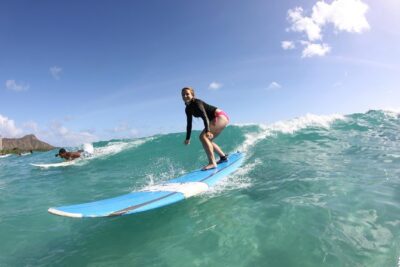

Family, Private & Group Surfing Lessons, Waikiki Courtesy Shuttle
Read our review →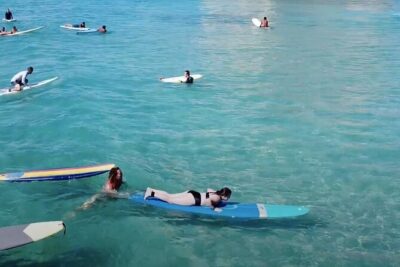
Surf Lesson Without the Crowds Including GoPRO Videos
Read our review →Browse the lists this tour appears in