
Reviewed · NORTH SHORE TOURS
Safe and Educational Shark Dive from Haleiwa: Sharks Guaranteed
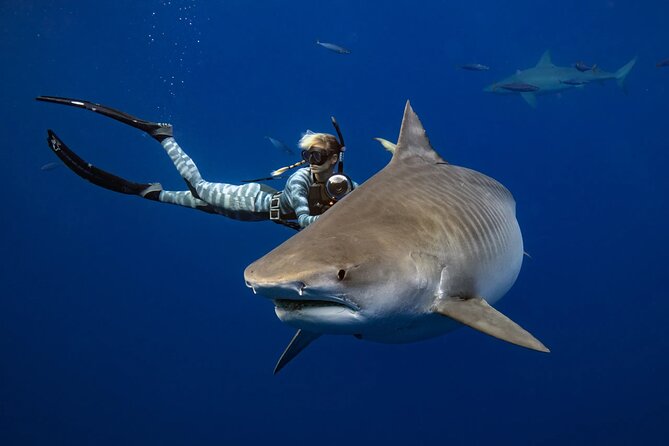
Sharks are the main event here, and you see them in their own ocean home, not behind glass or fed through a cage. Before entering the water, your marine biologist and safety diver explain shark behavior, body language, species, and the ways your own movements can affect an encounter.
I like the strong research and conservation focus, which gives the experience more purpose than a simple photo stop. I also like the calm, hands-on format: you hold a secure rope at the boat, look down at sharks below, and may get short guided swims with a safety professional nearby.
The main consideration is that this is still open-water ocean activity. Seasickness, nerves, changing weather, and the size of the group can shape your day. Most feedback praises the crew and safety, but one account found the water instructions rushed and the staff too sharp with nervous swimmers.
In This Review
- Key points for your Haleiwa shark encounter
- Haleiwa is the right starting point for a North Shore ocean trip
- The boat ride is your first lesson about sharks
- What happens when you enter the water
- Why the shark guarantee matters
- Safety is taken seriously, but speak up if you are nervous
- The guides make or break the mood
- Weather, whales, and the realities of an ocean trip
- Is $165.71 a fair price?
- Who will enjoy this most?
- Practical planning for your Haleiwa morning
- Should you book this shark encounter?
- FAQ
- Where does the shark encounter begin?
- Where does the activity end?
- How long does the experience last?
- Are sharks guaranteed?
- Is snorkeling equipment provided?
- Is the tour offered in English?
- Is this a private activity?
- What happens if bad weather cancels the activity?
- Can I cancel for a full refund?
Key points for your Haleiwa shark encounter
- Sharks are expected: The tour is designed around finding sharks, and the experience is marketed with a shark guarantee.
- Education comes first: You learn about species, gender, body language, physiology, seasons, weather, and Hawaiian cultural ties to sharks.
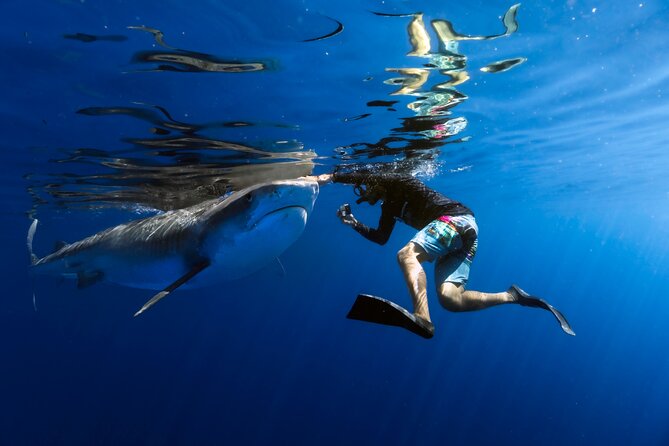
- You stay in the ocean: This is a free-water encounter rather than a traditional shark cage experience.
- Safety equipment is supplied: Snorkeling and safety gear are provided, with a safety diver or divemaster in the water.
- The water time can be substantial: Several accounts describe roughly an hour in the water, with some people receiving three to five guided swims.
- Budget for motion sickness: One practical tip is to read the Dramamine directions carefully before taking it.
Haleiwa is the right starting point for a North Shore ocean trip
You meet at the Haleiwa Commercial Loading Dock at 66-101 Haleiwa Road, then return to that same point after about two hours. The setting keeps the outing simple: arrive in Haleiwa, board the boat, head offshore, and finish where you started.
The mobile ticket makes check-in easy, and the meeting point is near public transportation. Still, I would allow extra time to reach Haleiwa and find the loading dock without rushing. The tour is short enough to fit into a North Shore day, but you will want to leave room around it for traffic, weather, and a meal in town.
This is offered in English. It is also described as a private activity in which only your group participates, though one piece of feedback reported a group of 12 people. If group size matters to you, ask the operator what private means for your departure and how many people will be aboard.
More of the North Shore to see:
- Oahu Grand Circle Island and Haleiwa Tour: 9-Hr Deluxe Experience
★ 5.0 · 17,387 reviews - Oahu Circle Island Tour with Waimea Waterfall
★ 5.0 · 3,912 reviews - Tour of North Shore & Waimea Waterfall
★ 5.0 · 3,682 reviews
The boat ride is your first lesson about sharks
The ride offshore is not simply transport. Your marine biologist and safety diver use this time to explain what you may see and how to act around it.
You learn to tell different shark species apart, along with pelagic fish and whales. The lesson also covers how to identify a shark’s sex, how male and female behavior can differ, and what body language may signal curiosity, caution, or a change in mood.
That preparation matters. A shark moving near the boat can look alarming if you know little about its behavior. Once you understand the animal’s posture and movement, the encounter becomes easier to read and less like a scene from a movie.
The crew also discusses shark physiology and how biology shapes behavior. You learn how your own actions may affect a shark, including how to discourage or attract the attention of a shark or another open-ocean animal.
Weather and seasons receive attention too. Conditions can affect visibility, boat movement, and shark behavior, so the same trip may feel different from one day to the next. This is useful information, not filler. It helps you understand why wildlife experiences cannot be timed like a museum visit.
The program also connects sharks with mano, the Hawaiian and Polynesian word and cultural idea associated with sharks. That cultural context gives the encounter a local meaning and reinforces the conservation message.
What happens when you enter the water
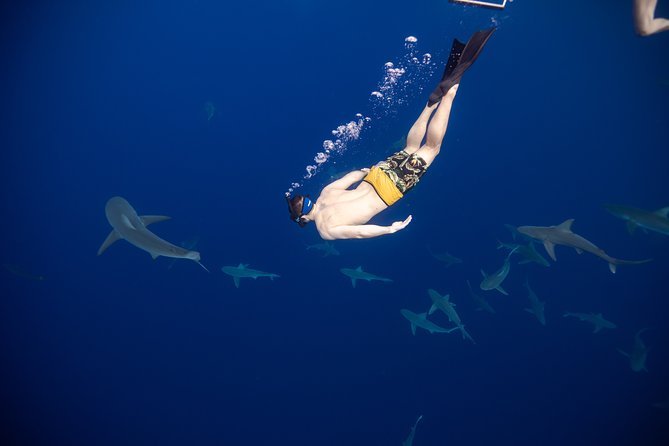
After the briefing, you receive snorkeling and safety equipment before entering the ocean. The central setup is straightforward: you hold a secure rope attached to the boat while looking down at sharks moving below and around you.
Several accounts describe spending about an hour in the water. Some people had three to five short guided swims, with a water guide helping them move away from the rope for a closer look while another crew member recorded photos or video.
That format gives you two ways to take part. If you are nervous, you can stay close to the boat and rope, watch the sharks from the surface, and let the crew set the pace. If you feel comfortable, you may be guided into a more open position for a closer view.
Do not assume that every person will swim freely for the same amount of time. The crew has to manage safety, boat position, sea conditions, and several people in the water. One account praised the chance to move around, while another said the group remained at the rope for most of the session.
This is one of the few areas where expectations matter. Ask during the briefing what movement is allowed, how the rotation works, and how much individual time you can expect. Clear instructions will make the experience better, especially if you are doing this for the first time.
Why the shark guarantee matters
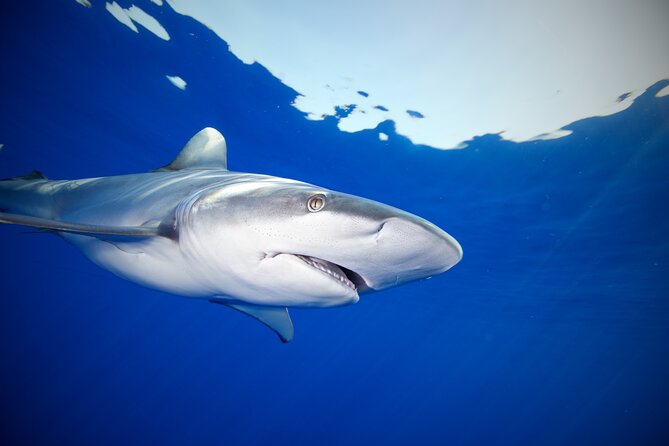
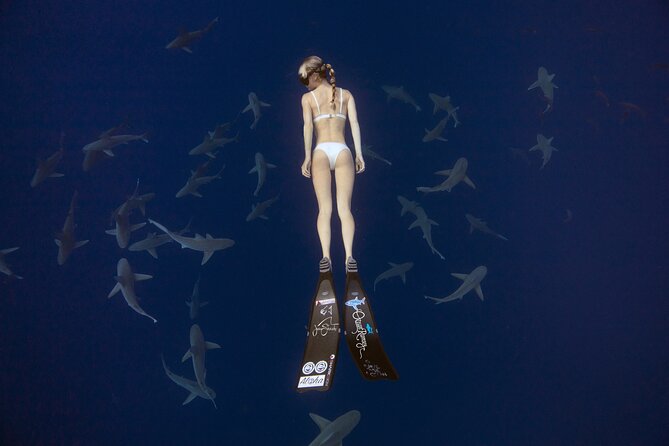
Wildlife is unpredictable, but this experience is built around a location and program where sharks are expected. The tour specifically advertises sharks as guaranteed, and the feedback describes seeing many sharks on the scheduled outings.
You may see more than sharks. Reports include pelagic fish, turtles, whales, dolphins, and a mother whale with a new calf. Tiger sharks have also appeared, including during a period people associate with tiger shark season.
Those extra sightings are a bonus, not the core promise. You should book this for the shark encounter and treat whales, turtles, dolphins, and other fish as welcome additions.
The setting also changes the emotional tone. You are not watching a shark perform for food or following an artificial underwater track. You are sharing the water with animals that continue on their own route, which can make the experience feel quiet and respectful.
That does not remove all risk. It does mean the staff’s behavior rules are important. Listen closely, keep your movements controlled, and follow the safety diver’s directions even if you have watched shark videos or snorkeled elsewhere.
More shark cage trips:
- Oahu Shark Dive
★ 5.0 · 2,903 reviews - Oahu: Shark Cage Dive on the North Shore
★ 4.8 · 1,485 reviews - Shark Cage Diving on Oahu’s North Shore
★ 5.0 · 1,391 reviews - Cage-Free Shark Swim from Oahu
★ 5.0 · 1,064 reviews
Safety is taken seriously, but speak up if you are nervous
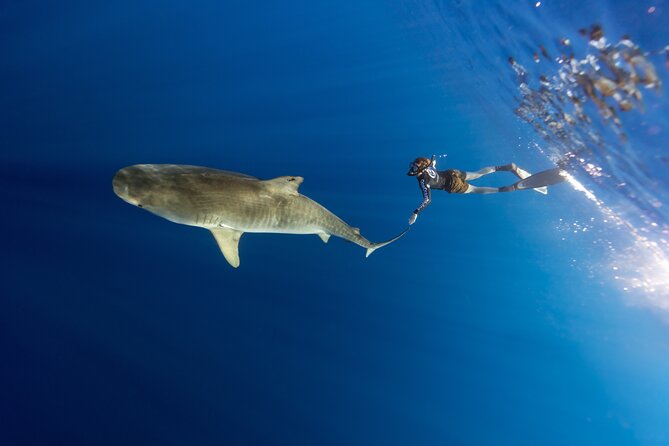
Safety is the most praised part of this experience. The crew includes a marine biologist and a safety diver or divemaster, and the briefing covers both animal behavior and human behavior.
People who began the outing frightened described feeling secure once the crew explained what to expect. Several accounts specifically praised guides including Gina, Faith, Mariah, Kevin, Matt, Hayley, Drew, and others for helping nervous swimmers feel calm and supported.
The balance of personalities can vary by departure. Most feedback describes the staff as friendly, experienced, patient, and professional, with a good mix of seriousness and humor. One account, however, described a crew member speaking harshly to people who were afraid to enter the water.
That criticism is worth taking seriously. A firm safety instruction is not the same as a gentle reassurance, and first-time swimmers may need both. Tell the crew clearly if you are anxious, need help with your mask or fins, or are not ready to leave the boat.
You do not need to pretend you are fearless. The better approach is to understand the rules, stay close to the safety professional, and decide how far into the water you want to go within the limits of the operation.
The guides make or break the mood
The best guides add context without turning the trip into a lecture. They explain why sharks act as they do, point out differences between species, and help you notice details you might otherwise miss.
Gina receives especially strong praise for assisting swimmers during their free-water time. Faith, Mariah, Kevin, Matt, Hayley, and Drew are also named positively in various accounts, though you cannot count on a particular person being assigned to your boat.
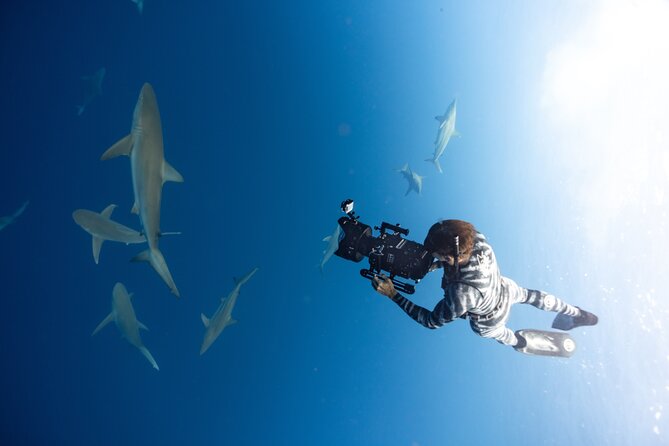
The crew also appears to include a photographer or videographer on some outings. A photo package may be available afterward, and several people felt the images and videos were worth buying. Another person found the package very expensive, so ask about the price before the trip if you want to set a firm budget.
If you bring your own GoPro, make sure it is permitted and secure it carefully. One person was glad to have personal footage, but your equipment should never interfere with the safety line, the crew, or another swimmer.
Weather, whales, and the realities of an ocean trip
The experience requires good weather. If poor conditions force a cancellation, you are offered another date or a full refund.
That policy protects the safety of the trip, but it also means you should avoid placing this activity on the final few hours of your Oahu visit. A weather change may leave you without another chance to reschedule.
Cloudy or rainy conditions do not automatically ruin the outing. One departure had clouds and light rain but still produced sharks, turtles, fish, and whales, including a young whale. Visibility and comfort can change, though, and the ocean may feel rougher than it appears from shore.
Motion sickness is another practical concern. If you use Dramamine, read the instructions carefully and follow the timing and dosage information on the package or from a medical professional. A moving boat and open-water conditions can affect even people who normally feel fine on the water.
Bring the attitude that the sea sets the schedule. The crew can choose a safe operating plan, but it cannot control clouds, current, whale sightings, or the exact path of every shark.
Is $165.71 a fair price?
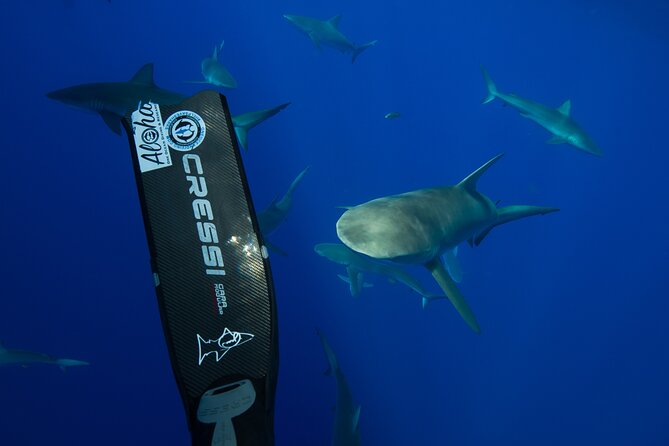
At $165.71 per person, this is not a low-cost snorkeling outing. I think the price is easier to justify because it includes a specialist-led lesson, a safety diver or divemaster, snorkeling and safety equipment, boat time, and the chance to see sharks without a cage.
You are paying for more than time in the water. The education covers shark biology, species identification, behavior, conservation, Hawaiian culture, and the Hawaii Shark Count identification program. If you want to understand the animals rather than simply stand near them for a photograph, that added instruction has real value.
The value also depends on how much water time you receive. Several accounts describe roughly an hour in the water, and some people had three to five guided swims. A person who stays near the rope and watches quietly may still enjoy the outing, but someone expecting constant individual swimming time could feel the price more sharply.
The optional photo and video package is separate in spirit, even if arrangements vary. Some people considered it worthwhile, while another called it costly. Decide in advance if professional footage matters to you, and do not let the excitement of the day push you into an unplanned purchase.
Compared with a standard boat trip that hopes to spot wildlife from the surface, the price buys a much closer encounter and a more structured lesson. Compared with a smaller operation, it may feel less personal if the boat is full.
Who will enjoy this most?
I would recommend this to adults, couples, families with confident older children or teenagers, solo visitors, and anyone curious about marine conservation. Most people can participate, and the equipment and safety support make the activity approachable for first-timers.
It is especially suitable if you have always wanted to swim with sharks but feel uneasy about it. The combination of a briefing, a rope connected to the boat, and a nearby safety professional gives you a clear structure.
You should think twice if you are very uncomfortable with boats, prone to seasickness, or looking for a quiet shore-based activity. You also need to accept that the sea can be rough and that the crew may limit movement for safety.
Children and nervous family members should be prepared honestly. Do not promise a free-form swim if you have not confirmed that format. Explain that they may stay at the rope, watch from the boat, or enter the water only when ready.
Practical planning for your Haleiwa morning
The trip lasts about two hours and returns to the Haleiwa Commercial Loading Dock. Confirmation arrives at booking, and the mobile ticket is useful for check-in.
I would schedule this early enough in your Oahu plans to allow a second chance if weather cancels the first date. It is also wise to keep the rest of the day flexible, since you may want time to recover from motion sickness or simply enjoy Haleiwa afterward.
Wear what you need for a water activity, follow the equipment instructions, and listen carefully to the briefing. The details about body position, movement, the rope, and entering the water are not minor formalities.
The cancellation terms are simple: cancel at least 24 hours before the local start time for a full refund. Changes or cancellations inside 24 hours are not accepted for a refund, except when the operator cancels because of weather or because the minimum number of participants is not met.
Should you book this shark encounter?
I would book it if you want a close, guided look at wild sharks and value solid instruction as much as the thrill. The high rating, strong recommendation rate, repeated praise for safety, and accounts of sharks appearing in large numbers all support its appeal.
Go in with realistic expectations. The boat may carry more people than you prefer, the water may be cloudy or rough, and the crew’s tone may vary. You may hold the rope for much of the session rather than swim wherever you wish.
For the best chance of enjoying it, reserve ahead, leave room for weather changes, prepare for motion sickness, and tell the crew about your nerves. If the idea of seeing sharks in their natural environment excites you more than the idea of a polished theme-park attraction, this is a strong Oahu choice.
FAQ
Where does the shark encounter begin?
It begins at the Haleiwa Commercial Loading Dock, 66-101 Haleiwa Road, Haleiwa, Hawaii 96712.
Where does the activity end?
The activity ends back at the same meeting point in Haleiwa.
How long does the experience last?
The experience lasts about two hours.
Are sharks guaranteed?
Yes. The experience is marketed as a shark encounter with sharks guaranteed.
Is snorkeling equipment provided?
Yes. Snorkeling and safety equipment are made available for the activity.
Is the tour offered in English?
Yes. The activity is offered in English.
Is this a private activity?
It is described as a private tour or activity in which only your group participates. Because group-size expectations can matter, confirm the arrangement with One Ocean Diving before booking.
What happens if bad weather cancels the activity?
You will be offered a different date or a full refund if poor weather causes the operator to cancel.
Can I cancel for a full refund?
Yes. You can cancel at least 24 hours before the local start time for a full refund. Cancellations or changes made less than 24 hours before the start time are not refunded.
Just added around Oahu
- Kevo’s Beach Bus★ 5.0 · 3 reviews
- 2hr Luxury Private Sailing Catamaran for 7-12 People★ 5.0 · 3 reviews
- Mokulua Islands Self-Guided Kayak Adventure★ 3.5 · 3 reviews
- Night Ninja Adventure Course in Kapolei★ 3.5 · 3 reviews
- Arrival Lei Greeting –HNL to Waikiki Private Transfer★ 5.0 · 3 reviews
- Private “Limousine” USS Arizona Memorial & Cultural Honolulu Tour★ 5.0 · 3 reviews
- Surf Lessons get your Social Media video & photos you Surfing HI.★ 5.0 · 3 reviews
- (2nd)Diamond Head Hike w/ Malasada Starts at 7:00 a.m.★ 3.3 · 3 reviews
North Shore Tours, compared.
Oahu Grand Circle Island and Haleiwa Tour: 9-Hr Deluxe Experience
Read our review →
Oahu Circle Island Tour with Waimea Waterfall
Read our review →
Oahu’s North Shore: 8-Line Zipline Adventure
Read our review →
All Inclusive Ultimate Circle Island Tour, Waimea Falls & Lunch
Read our review →
Oahu North Shore Experience: Activities, Waterfall & Free Time
Read our review →
Browse the lists this tour appears in