
Reviewed · HISTORICAL TOURS
Through A Glass Darkly The Strange and Tragic History Of Honolulu
Honolulu’s past gets much darker and more complicated once you leave the beach. This 90-minute walk follows conquest, royal power, missionary change, the overthrow of Hawaii’s monarchy, and even a few ghost stories through the civic heart of downtown.
I like the way the tour uses real places instead of a lecture room, and I like the small group limit of 20, which gives guide Terry room to answer questions. The stops are close together, so you cover a lot without wearing out your feet.
The main drawback is that this is a standing-heavy walk. You spend about five minutes at most stops, often in the sun, and one past participant felt the ghost material took up more space than expected. If you want only formal political history, ask about the balance at the start.
In This Review
- Key points to know before you go
- Why this Honolulu walk feels different
- King Kamehameha’s statue and the conquest of Oahu
- Iolani Palace and the end of the monarchy
- Kawaiahaʻo Church and the missionary era
- Mission Houses and Honolulu Hale
- The State Capitol and Queen Liliuokalani
- St. Andrew’s Cathedral and a tragic royal story
- Capitol Modern and the former Royal Hawaiian Hotel
- Aliʻiolani Hale and the Massie Affair
- What the $39 price buys you
- Standing, shade, weather, and group comfort
- Who should book this experience
- Should you book Through a Glass Darkly?
- FAQ
- Where does the tour start?
- Where does the tour end?
- How long does the tour last?
- What time does it begin?
- Is admission to Iolani Palace included?
- Is the tour offered in English?
- How many people can join the tour?
Key points to know before you go
- Ten central Honolulu landmarks: The route links the King Kamehameha statue, Iolani Palace, churches, government buildings, and former royal sites.
- Terry leads the walk: He is a retired history professor who brings extra context to Hawaii’s monarchy, conquest, and political changes.
- A compact 90-minute route: The walk covers many topics without requiring a long trek between stops.
- The story does not stop at the postcard version: Expect difficult subjects, including conquest, missionary influence, the overthrow of the monarchy, and the Massie Affair.
- Ghost stories are part of the package: They add a spooky layer, but they may not suit you if you want a strictly academic tour.
- Plan for standing and weather: The guide tries to keep the group in shade, and help is available for stairs or inclines.
Why this Honolulu walk feels different
Many Honolulu history tours focus on a single royal building or a short introduction to King Kamehameha. This one connects the pieces. You begin with military conquest, move into royal life, then follow the pressure placed on the monarchy by missionaries, business interests, and political leaders.
That wider arc matters. A building can look peaceful while carrying a painful story. A church can represent faith to one group and cultural disruption to another. A government office can appear handsome while recalling a period of political control and scandal.
Terry is especially well suited to this kind of route. He is a retired history professor, and his style seems to favor context over quick facts. On a one-on-one outing, he was able to expand well beyond his usual talk. With up to 20 people, you may not receive quite that much individual attention, but the small maximum still keeps the walk more personal than a large coach excursion.
The tone is serious, but not grim from start to finish. Terry is also described as kind and humorous, which helps when the subject turns to imprisonment, overthrow, unhappy marriages, and racial and political tension. You get a history lesson with human stories attached.
A few more Oahu days out worth weighing up
- Oahu: Mauka Warriors Luau Honoring Polynesia’s Forgotten History
★ 5.0 · 3,013 reviews - Pearl Harbor History Remembered Tour from Ko Olina
★ 5.0 · 1,009 reviews - Pearl Harbor with USS Arizona and Hawaiian Kingdom History Tour
★ 4.5 · 184 reviews
King Kamehameha’s statue and the conquest of Oahu
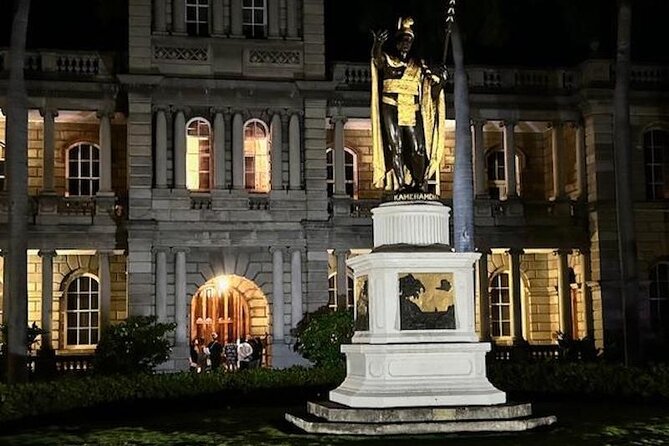
The tour starts at the King Kamehameha I Statue at 447 South King Street. The opening stop lasts about five minutes and costs nothing to enter, since it is an outdoor landmark.
This is a smart starting point. King Kamehameha is often presented as a heroic unifier, but the conquest of Oahu also involved violence and fear. The introduction asks you to hold both truths at once: he helped bring the islands under one rule, yet that process was horrifying for people on the losing side.
That early framing sets the tone for the whole experience. You are not getting a polished royal story with the hard parts left out. You hear about power, ambition, and the cost of political change. It also gives later stops more meaning, since the monarchy did not appear from nowhere. It grew out of conflict and then faced a different kind of threat from foreign influence and local political pressure.
Because the stop is outdoors, wear sensible walking shoes and be ready to listen while standing. The opening is short, but it gives you the lens you need for the next hour and a half.
Iolani Palace and the end of the monarchy
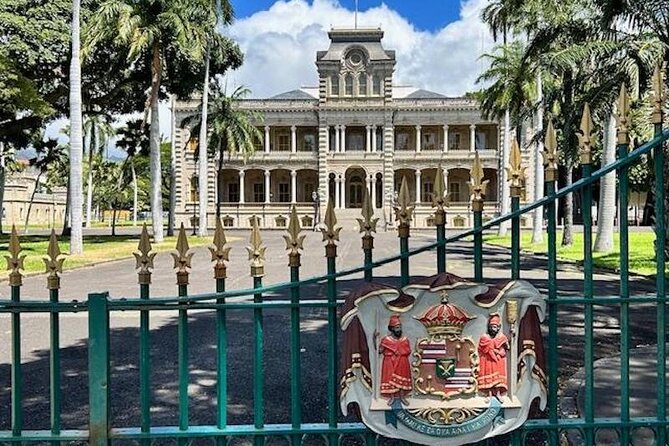
Iolani Palace gets about ten minutes, making it the longest scheduled stop. Admission inside is not included, so this walk is best viewed as an exterior history lesson rather than a palace tour.
The palace is the emotional center of the route. Hawaii had kings, queens, court life, and royal ceremony within the United States, a fact that surprises many first-time visitors. The building also carries the story of the monarchy’s tragic overthrow.
You will learn how the palace came to be, what it represented, and how the royal era ended. This is where Terry’s storytelling matters most. A quick photograph tells you almost nothing about the people who lived there or the political forces that removed them from power.
If you have already toured the palace interior, this walk can add useful political context. If you have not, you may leave wanting to return for a separate admission visit. That is both a strength and a small limitation. Ten minutes is enough for a strong introduction, but not enough to explore the rooms, furnishings, and full royal story indoors.
The route’s treatment of the overthrow is one of its most valuable features. You are encouraged to see it not as a vague change of government, but as a painful turning point with lasting meaning in Hawaii.
Kawaiahaʻo Church and the missionary era
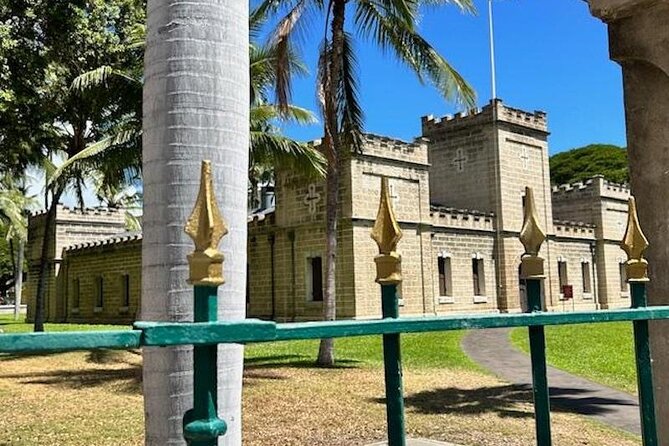
The next stop is Kawaiahaʻo Church, known to Hawaiians as the stone church. It receives about ten minutes, with no admission charge listed.
The building’s name and construction open a useful discussion about cultural change. It was designed by the missionary Hiram Bingham, and its heavy stone form represents the arrival of a new religious and social order. The stop is not simply about architecture. It is about who shaped Hawaii’s institutions and how those changes affected Hawaiian life.
This is one of the places where the tour moves beyond easy labels. Missionaries came with religious aims, but their work also brought education, new rules, new forms of authority, and major changes in daily life. The walk presents that complicated role without reducing it to a simple good-versus-bad story.
You may spend much of the stop listening rather than looking around. That is fine if you enjoy interpretation, but less satisfying if you want a longer architectural visit. The church is best appreciated as a setting for the story, not as a full church tour.
A different sort of day, same island:
- Oahu Grand Circle Island and Haleiwa Tour: 9-Hr Deluxe Experience
★ 5.0 · 17,387 reviews - Oahu: Grand Tour Around Island 16 Locations plus Snorkeling
★ 5.0 · 8,669 reviews - Parasailing Experience in Waikiki, HI
★ 5.0 · 7,692 reviews - Salute to Pearl Harbor Including USS Arizona
★ 4.5 · 7,433 reviews
Mission Houses and Honolulu Hale
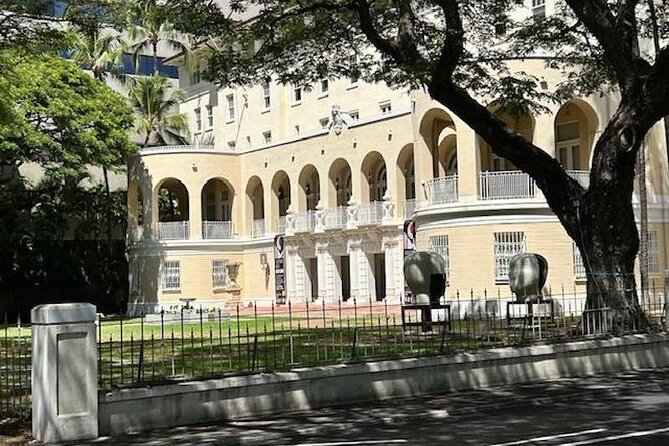
The Hawaiian Mission Houses Historic Site and Archives receives about five minutes. Admission is listed as free for this stop, though the short visit means you should not expect a full museum experience.
The focus here remains the missionary period and its effects. The phrase often used about missionaries, that they came to do good and did very well, carries a sharp edge. It points to the way religious and educational work could also bring social power and economic opportunity.
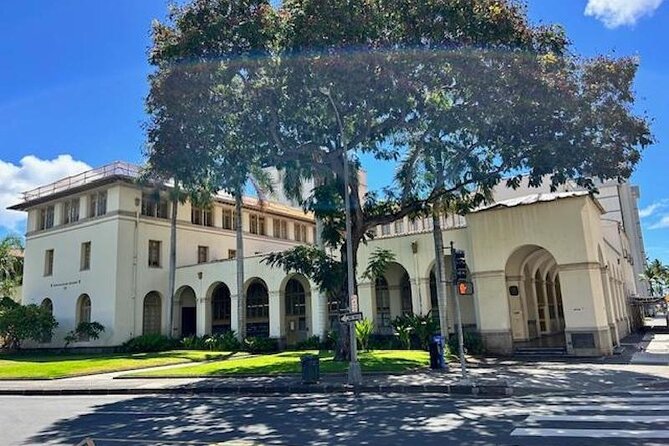
That idea leads naturally to Honolulu Hale, the city hall. Its Italianate Spanish Colonial Revival design is attractive, but the tour uses the building to show how a beautiful civic setting can conceal an unpleasant past. You get only about five minutes there, so the value comes from Terry’s explanation rather than an extended look at the building.
I appreciate the pairing. One stop explains outside influence, and the next shows how political authority took shape in Honolulu. The buildings may seem unrelated if you visit alone. On this route, they become chapters in the same story.
The State Capitol and Queen Liliuokalani
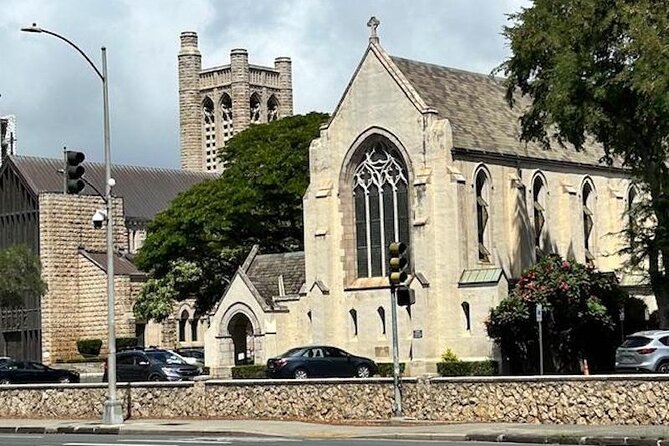
The Hawaii State Capitol is another five-minute stop. Its design expresses the aloha spirit, and the nearby statue of Queen Liliuokalani brings the discussion back to the last reigning monarch.
This part of the walk gives you a more personal view of the overthrow. Queen Liliuokalani was not only a political figure. She was also a person dealing with the loss of her government, her home, and her authority.
Washington Place adds another layer. It was Queen Liliuokalani’s home, where she lived in an unhappy marriage and later returned after the monarchy was overthrown. The stop is brief, but that personal detail keeps the story from becoming a list of dates and institutions.
I find this section especially useful because it shows the monarchy through one woman’s life. The palace represents public power. Washington Place suggests private sorrow and endurance. Together, they make the political story easier to understand on a human level.
The Capitol and Washington Place are outdoor stops, so you will again be standing. The guide tries to place the group in shade, but Honolulu’s heat and glare remain practical concerns.
St. Andrew’s Cathedral and a tragic royal story
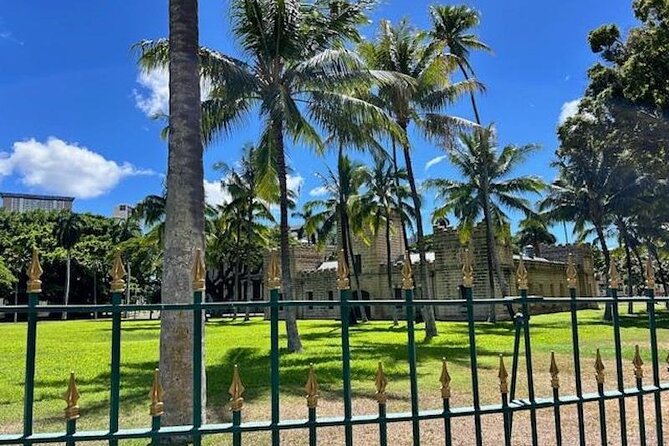
The Cathedral of St. Andrew is one of the route’s most striking architectural stops. Its sandstone blocks were cut in England and shipped to Hawaii, and its nave features magnificent stained glass.
The building also carries a tragic story involving a king and his young son. That combination of beauty and grief fits the tour’s larger theme. Honolulu’s grand buildings are not just decorative backdrops. They hold stories about royal families, foreign connections, ambition, and loss.
Five minutes will give you an introduction, not enough time for a slow inspection of the stained glass or the full interior. If the cathedral is open and you want to look longer, you may need to return independently. The tour’s purpose is to connect the site to the political and royal story, not to provide an extended church visit.
This stop also helps break up the government buildings. After several discussions of authority and law, the cathedral brings in art, worship, and personal tragedy.
Capitol Modern and the former Royal Hawaiian Hotel

Capitol Modern, also known as the Hawaii State Art Museum, occupies the site of the original Royal Hawaiian Hotel, built in 1872. The hotel was successful enough that a second Royal Hawaiian was later built on Waikiki Beach, the famous Pink Palace.
This is a fine example of the tour’s method. A modern art museum may seem unrelated to monarchy and political conflict, but the building’s earlier life links downtown Honolulu with the growth of tourism and the changing image of Hawaii.
Admission is not included, and the scheduled stop lasts about five minutes. You should not treat this as an art museum visit. Instead, Terry uses the site to show how Honolulu’s public identity shifted over time, from royal capital to modern civic and tourism center.
I like this kind of detail because it gives you a reason to notice a building you might otherwise pass. It also reminds you that the Waikiki image of Hawaii is only one chapter. Downtown contains older layers, many of them less polished and more revealing.
Aliʻiolani Hale and the Massie Affair
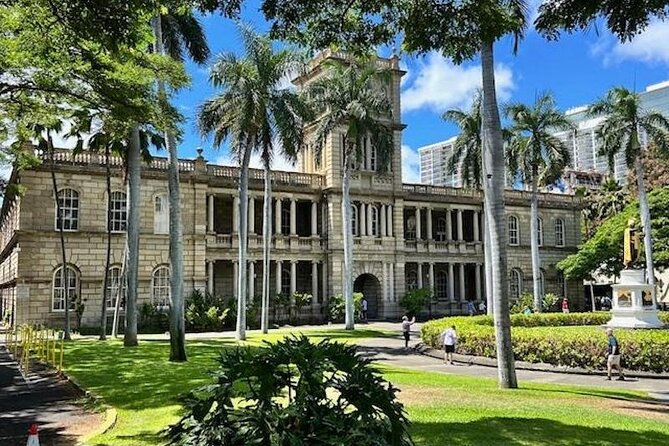
The final stop is Aliʻiolani Hale, now the Judiciary Building and home of the Hawaii State Supreme Court. It was also the setting for the Massie Affair, described as a major event in Hawaiian jurisprudence.
This is a strong ending because it brings the tour from royal power and political overthrow into the courtroom. The Massie Affair is a difficult and important legal story, and the building gives it a physical setting. You are not only hearing about a case in the abstract. You are standing where the legal drama played out.
The scheduled stop lasts five minutes and admission is free. As with the other civic buildings, the exterior visit is short. The payoff depends on the guide’s ability to explain why the case mattered and how it fits into Hawaii’s wider political and social story.
By this point, the route has moved through conquest, monarchy, missionary influence, government, tourism, and law. That is a lot for 90 minutes. Terry’s background helps keep the material connected rather than letting it become ten unrelated facts.
What the $39 price buys you
At $39 per person, this is not the cheapest way to see downtown Honolulu, since many of the stops are outdoor sites you can visit without an admission fee. You are paying for the guide’s interpretation, the route, and the connections between places.
That value depends on your interests. If you want only photographs of Iolani Palace and the King Kamehameha statue, you can walk around on your own. If you want to understand how conquest, missionary work, monarchy, and the overthrow fit together, the fee is more reasonable.
The small maximum of 20 helps. A large group would make short sidewalk talks harder to hear and would reduce the chance to ask questions. Terry’s experience as a retired history professor is another part of the price. This is not a simple orientation walk. It is built around explanation and storytelling.
The tour is also efficient. In 90 minutes, you reach ten important sites without committing half a day. That makes it a useful first look at downtown Honolulu, especially if you plan to return to Iolani Palace, the cathedral, or Capitol Modern on your own.
Standing, shade, weather, and group comfort
The walking distance is not described as long, but the tour includes a lot of standing. One stop lasts ten minutes and most last five, so the physical challenge is less about distance than about being on your feet in Honolulu’s weather.
Terry tries to keep the group in shade, which is helpful, but you should still bring water, sun protection, and comfortable shoes. The tour begins at 10:45 a.m., a time when heat may matter. Assistance is available for stairs or inclines, and service animals are allowed.
The group can include up to 20 people. That is small enough for a personal feel, though a one-on-one experience will naturally allow more back-and-forth than a full group. The route is near public transportation, and it ends back at the starting point, which makes it easier to fit into a day of downtown sightseeing.
Rain is a possibility in Honolulu. The walk can continue through wet weather, but conditions may affect comfort and how long you want to linger outdoors.
Who should book this experience
I would choose this walk if you want the parts of Hawaiian history that are often softened or skipped. It suits history lovers, people interested in monarchy and political change, and anyone who wants more than a beach-centered view of Oahu.
It also works well for a mixed-age group. Terry has been patient and engaging with three generations together, and his humor helps younger participants stay with serious material. The subject matter is still mature, so families should be ready for stories about conquest, political injustice, unhappy family life, and tragedy.
You may want a different experience if you dislike ghost stories. They are part of the tour’s identity, and some of the historical sites come with tales of sightings. One past participant found the ghost material excessive, while others considered it a fun and sufficiently spooky addition.
You should also think twice if you need to sit often or want long indoor visits. The route is compact, but most of the experience happens outside, standing beside buildings.
Should you book Through a Glass Darkly?
Book it if you want a sharp, story-led introduction to Honolulu’s difficult past rather than a general sightseeing walk. Terry’s history background, the small group size, and the carefully linked downtown sites make the $39 worthwhile for the right audience.
Skip it if you want a relaxed architectural stroll with little political discussion, or if ghost stories are not your thing. For everyone else, this is a useful way to see Honolulu with more context, then return to the sites that deserve extra time.
You can cancel for a full refund up to 24 hours before the 10:45 a.m. start time. Changes or cancellations within 24 hours are not refunded.
FAQ
Where does the tour start?
It starts at the King Kamehameha I Statue at 447 S King Street, Honolulu, Hawaii 96813.
Where does the tour end?
The activity ends back at the starting point.
How long does the tour last?
The walking tour lasts approximately one hour and 30 minutes.
What time does it begin?
The scheduled start time is 10:45 a.m.
Is admission to Iolani Palace included?
No. Admission to Iolani Palace is not included in the tour price.
Is the tour offered in English?
Yes. The tour is offered in English, and a mobile ticket is provided.
How many people can join the tour?
The tour has a maximum group size of 20 people.
Just added around Oahu
- Kevo’s Beach Bus★ 5.0 · 3 reviews
- 2hr Luxury Private Sailing Catamaran for 7-12 People★ 5.0 · 3 reviews
- Mokulua Islands Self-Guided Kayak Adventure★ 3.5 · 3 reviews
- Night Ninja Adventure Course in Kapolei★ 3.5 · 3 reviews
- Arrival Lei Greeting –HNL to Waikiki Private Transfer★ 5.0 · 3 reviews
- Private “Limousine” USS Arizona Memorial & Cultural Honolulu Tour★ 5.0 · 3 reviews
- Surf Lessons get your Social Media video & photos you Surfing HI.★ 5.0 · 3 reviews
- (2nd)Diamond Head Hike w/ Malasada Starts at 7:00 a.m.★ 3.3 · 3 reviews
Historical Tours, compared.

Mauka Warriors Luau Honoring Polynesia’s Forgotten History
Read our review →
Pearl Harbor History Remembered Tour from Ko Olina
Read our review →
Pearl Harbor with USS Arizona and Hawaiian Kingdom History Tour
Read our review →
Pearl Harbor [Early Access], USS Arizona & Historic Honolulu Tour
Read our review →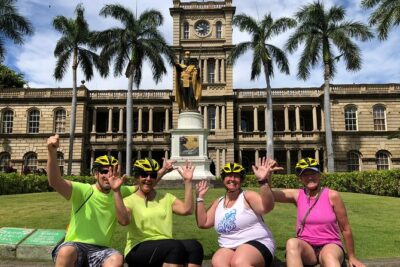


Best Of Pearl Harbor: USS Arizona Memorial & Historic Honolulu
Read our review →Browse the lists this tour appears in