
Reviewed · SURF LESSONS
Oahu: Waikiki 2-Hour Semi-Private Surfing Lesson
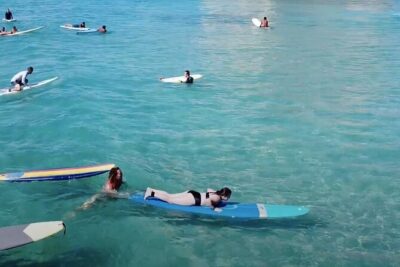
A secluded beach near Waikiki gives this lesson a useful advantage: you can focus on your first waves without the full distraction of a crowded shoreline. I like the 20-minute land briefing, which covers currents, tides, wind, wave behavior, safety, and surf etiquette before you enter the water. I also like that your instructor adjusts the board and lesson to your skill level, rather than treating every beginner the same.
The main drawback is language. The activity is listed with an English-speaking instructor, and one booking made for a Spanish lesson was conducted in English instead. Children 10 and under and weak swimmers must take a private one-on-one lesson, so families should check that requirement before booking.
In This Review
- Key points to know before you book
- Why a secluded beach near Waikiki matters
- The first 20 minutes: learning the ocean before entering it
- Choosing the board and checking your gear
- Entering the water and learning the basic movements
- Instruction that fits first-time and advanced surfers
- Is $156 a fair price for two hours?
- Who should book this surf lesson?
- What to bring and how to prepare
- Should you book it?
- FAQ
- How long is the surfing lesson?
- Where does the lesson take place?
- Is the lesson suitable for complete beginners?
- What equipment is included?
- What language is the lesson taught in?
- What should I bring?
- Can children or weak swimmers join the lesson?
Key points to know before you book
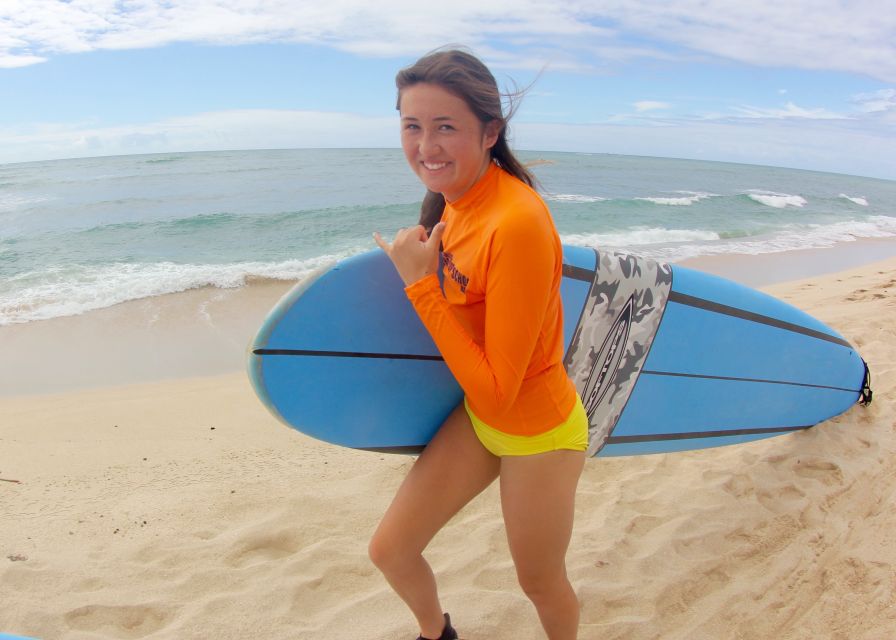
- A quieter beach near Waikiki: You get room to work on basic skills away from the busiest surf areas.
- Twenty minutes of useful theory: Learn about currents, tides, winds, wave behavior, safety, etiquette, and board positioning before getting wet.
- Practice beyond standing up: The water session includes paddling, turning, maneuvering over breaking waves, and board control.
- Equipment is included: Your package covers a surfboard, leash, rash guard, reef gear, and booties.
- Private-group format: The instructor can work with your ability level, including advanced surfers learning local conditions.
- English instruction: The stated language is English, so do not book this lesson expecting Spanish instruction without confirming it first.
Why a secluded beach near Waikiki matters
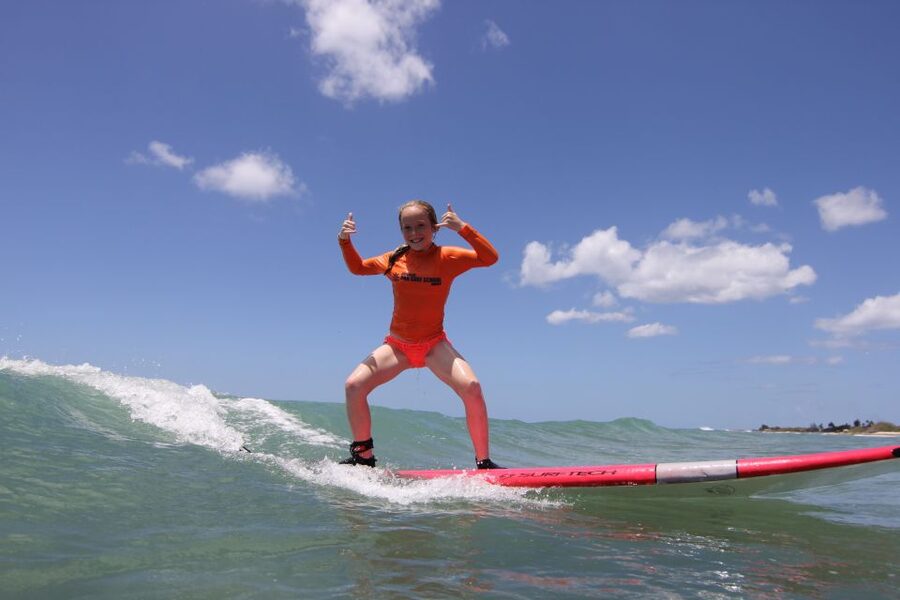
Waikiki is famous for beginner-friendly surf, but famous also means busy. A quieter beach can make your first attempt feel less like a public performance and more like a lesson. You still have to manage the board, the waves, and your nerves, but there may be fewer distractions while you learn.
I see this as the best feature for a first-time surfer. You need to listen closely to timing and body position. Having a little breathing room helps you hear corrections and focus on the next wave instead of watching every person around you.
The setting also suits a mixed group. A total beginner can work on the basics, while a more experienced surfer can ask about local wind, current, wave behavior, and positioning. The instructor is expected to adjust the teaching to your skill level, which gives the two-hour session more value than a one-size-fits-all introduction.
Still, secluded does not mean private water. You should expect an active ocean lesson, not a calm swimming session. Conditions can shape how much time you spend standing, paddling, or simply learning to read the water. Your instructor’s guidance is important, but your progress will also depend on balance, swimming ability, comfort in moving water, and the day’s surf.
More surf lessons on Oahu:
- Open Group Surfing Lesson in Waikiki, Hawaii
★ 4.5 · 582 reviews - Oahu: Beginner-Friendly Waikiki Beach Surfing Lesson
★ 4.9 · 425 reviews - Surfing Lessons On Waikiki Beach
★ 4.5 · 317 reviews
The first 20 minutes: learning the ocean before entering it
The lesson begins on land with a briefing of about 20 minutes. This is not filler. It lays out the parts of surfing that beginners often discover the hard way.
You learn how waves form and move, how currents affect your position, and how wind and tides can change the water. You also cover water safety and surf etiquette, including how to share the area responsibly. That basic etiquette matters because a surfboard is large, heavy, and capable of hurting someone if handled carelessly.
Your instructor also explains where to position yourself on the board and how to stand. The aim is to make the first attempt a series of clear steps rather than a frantic scramble. You will learn the correct body movement before trying it in the water.
This briefing is especially valuable if you have never surfed. Beginners often concentrate only on standing, but successful surfing starts earlier with reading the wave, positioning the board, paddling at the right time, and keeping your body balanced. I would pay close attention here and ask questions while you are still dry.
Choosing the board and checking your gear
After the land session, you select equipment based on your skill level. The lesson includes a surfboard, leash, rash guard, reef gear, and booties, so you do not need to arrange the basic surf kit separately.
The equipment choice matters. A first-time surfer needs a board that helps with balance and stability, while someone with experience may need a setup that allows more control. The exact board types are not specified, so your instructor’s assessment is the key part of this step.
You will also receive a briefing on the board, leash, and fins. That may sound simple, but knowing how each piece works helps you respond properly when a wave knocks you off. The leash keeps the board connected to you, while the fins help the board track and turn. Understanding the equipment also reduces the chance that you handle it in a way that could put another person at risk.
Bring your own towel and sunscreen. The supplied rash guard and reef gear help with the lesson, but they do not replace sun protection. Hawaii’s sun can make two hours on the water feel longer than two hours on land.
Entering the water and learning the basic movements
Once you are geared up, the instructor takes you into the water and explains how to move over breaking waves. This part can be more demanding than the short description suggests. You need to keep hold of the board, protect your position, and follow instructions while waves are moving toward you.
You begin with paddling technique. Paddling is the engine of surfing, and poor paddling makes it harder to catch a wave and easier to lose control of the board. The instructor works on your timing and body position so you can move with more purpose.
Next come turning and maneuvering. These skills help you direct the board instead of simply riding straight toward shore. You also learn how to control the board after a wave breaks and how to move around the water with greater confidence.
For many people, the highlight is standing and riding a wave. The lesson is designed to get you to that point, but the number of successful rides will vary. You may stand quickly, or you may spend much of the session building the balance and timing needed for one good ride. Either outcome is part of learning to surf.
I like that the lesson does not reduce surfing to a single trick. Standing is exciting, but paddling, turning, reading waves, and following safety rules are what let you keep improving after the lesson ends.
A few more Oahu days out worth weighing up
- Waikiki Private Group Surf Lesson
★ 5.0 · 298 reviews - Surf Lessons on the North Shore of Oahu
★ 5.0 · 267 reviews - Family, Private & Group Surfing Lessons, Waikiki Courtesy Shuttle
★ 5.0 · 216 reviews - Waikiki 2 Tank World Class Wreck SCUBA Diving – Certified Only
★ 4.5 · 205 reviews
Instruction that fits first-time and advanced surfers
Kai Sallas’ Pro Surf School Hawaii presents this as a lesson for complete beginners and advanced surfers alike. That wide range works only if the instructor pays attention to each person’s starting point.
If you are new to surfing, expect the focus to stay on safety, board position, paddling, standing, and basic maneuvering. You will need clear instructions and repeated practice. The instructor’s job is to break each movement into manageable parts and help you correct mistakes before they become habits.
If you already surf, the value is different. You can use the session to learn how local conditions affect your approach. The briefing covers winds, currents, tides, and waves, all of which matter when you are surfing somewhere unfamiliar. You may find the lesson most useful as a local orientation rather than a beginner class.
The private-group format should help keep the teaching personal. The available information does not give a maximum group size, so I would not assume that you will have a one-on-one instructor unless you book the required private lesson for a young child or weak swimmer. Still, the stated format allows the instructor to work with your group rather than placing you in a large general class.
One practical language note deserves attention. English is the listed lesson language. A Spanish-speaking customer booked a Spanish lesson but received instruction in English, despite finding the instructor friendly and attentive. If language affects your safety or understanding, confirm the teaching language before paying.
Is $156 a fair price for two hours?
At $156 per person, this is not the cheapest way to get on a surfboard. The value depends on what you want from the session.
You are paying for two hours of instruction, use of the surfboard and safety equipment, a land briefing, and a lesson in a quieter beach setting near Waikiki. The instructor also covers surf culture and ocean awareness, not just the mechanics of standing on the board. For a first lesson, that combination can justify the price if you want direct help and included equipment.
The cost makes less sense if you only want to rent a board and experiment on your own. It also may not suit someone who already surfs comfortably and needs only a board rental. The lesson earns its price through instruction, corrections, safety guidance, and access to a teacher who can explain local conditions.
The current rating is 4.9 from five reviews, with strong praise for the instructor’s ability and the fun of the session. One German booking described the beach as secluded and appreciated having space to learn, while also noting the instructor’s helpful tips. That matches the areas where I see the strongest value: personal instruction, a less crowded setting, and practical guidance.
Because the sample of ratings is small, I would treat the score as encouraging rather than conclusive. The language issue is the clearest caution to keep in mind.
Who should book this surf lesson?
This is a good match for an adult or teenager who can swim, has two free hours, and wants a guided first try rather than an independent rental. It also suits a small private group that wants the instructor to work at its own pace.
I would recommend it to beginners who feel nervous about the ocean. The land lesson gives you a basic plan before you enter the water, and the instructor covers safety, currents, and etiquette along with surfing technique. That preparation can make the experience feel more controlled.
It can also work for an experienced surfer who wants help with local conditions near Waikiki. The lesson is not limited to standing up, and the instructor can address paddling, turning, and maneuvering.
This is not suitable for pregnant women, people with back problems, or people with mobility impairments. Children age 10 and under and weak swimmers must take a private one-on-one lesson for safety reasons. Those rules are important, since surfing places repeated demands on balance, the back, and the ability to move safely in water.
What to bring and how to prepare
Pack a towel and sunscreen. Your board, leash, rash guard, reef gear, and booties are included, so you do not need to bring those items.
Wear a swimsuit or other clothing suitable for active time in the water. That specific clothing guidance is not listed as a requirement, but you should plan for movement, paddling, and repeated attempts to stand. Keep your expectations realistic: the goal is to learn proper technique and enjoy the waves, not to become an expert in one morning.
I would arrive ready to listen during the land session. Pay attention to the explanation of currents and wave behavior, then ask for clarification if a movement feels unclear. Surfing rewards patience. A clean, controlled attempt is more useful than rushing to stand and losing control of the board.
The activity lasts two hours, and starting times depend on availability. Check the available time before booking so the lesson fits your day. Free cancellation is available up to 24 hours in advance for a full refund, and you can reserve now and pay later, which helps if your Waikiki plans are still changing.
Should you book it?
Book this lesson if you want a guided introduction to surfing with equipment included, a quieter beach near Waikiki, and instruction that covers the ocean as well as the board. The strongest reasons to choose it are the useful 20-minute land briefing, the private-group format, and the chance to work on paddling, turning, and wave control with an instructor.
Think twice if you need instruction in Spanish, have limited swimming ability, or are looking for a simple low-cost board rental. For a first-time surfer who values safety and direct coaching, $156 can be a reasonable spend. For everyone else, confirm the language and group arrangement first, then decide if the added instruction fits your plans.
FAQ
How long is the surfing lesson?
The lesson lasts two hours.
Where does the lesson take place?
It takes place at a secluded beach near Waikiki in Oahu, Hawaii.
Is the lesson suitable for complete beginners?
Yes. The lesson is designed for complete beginners as well as advanced surfers who want to learn about local conditions.
What equipment is included?
The activity includes use of a surfboard, leash, rash guard, reef gear, and booties.
What language is the lesson taught in?
The listed instruction language is English.
What should I bring?
Bring a towel and sunscreen.
Can children or weak swimmers join the lesson?
Children age 10 and under and weak swimmers must take a private one-on-one lesson for safety reasons. Pregnant women, people with back problems, and people with mobility impairments should not take this activity.
More 2-Hour Experiences in Oahu
- 2-Hour Oahu Whale Watch from Ala Wai Harbor, Waikiki
★ 4.5 · 1,929 reviews - Waikiki, Oahu 2-Hour Whale Watching: Guaranteed Sightings
★ 4.5 · 1,064 reviews - Kailua 2-Hour Guided Kayaking Excursion, Oahu
★ 5.0 · 442 reviews - Oahu: Waikiki 2-Hour Beginner Group Surf Lesson
★ 4.9 · 191 reviews
Just added around Oahu
- Kevo’s Beach Bus★ 5.0 · 3 reviews
- 2hr Luxury Private Sailing Catamaran for 7-12 People★ 5.0 · 3 reviews
- Mokulua Islands Self-Guided Kayak Adventure★ 3.5 · 3 reviews
- Night Ninja Adventure Course in Kapolei★ 3.5 · 3 reviews
- Arrival Lei Greeting –HNL to Waikiki Private Transfer★ 5.0 · 3 reviews
- Private “Limousine” USS Arizona Memorial & Cultural Honolulu Tour★ 5.0 · 3 reviews
- Surf Lessons get your Social Media video & photos you Surfing HI.★ 5.0 · 3 reviews
- (2nd)Diamond Head Hike w/ Malasada Starts at 7:00 a.m.★ 3.3 · 3 reviews
Surf Lessons, compared.

Beginner-Friendly Waikiki Beach Surfing Lesson
Read our review →

Family, Private & Group Surfing Lessons, Waikiki Courtesy Shuttle
Read our review →
Browse the lists this tour appears in